Today's
EarthStation1.com 15% Off Commemorative Memorial Title: Edison's
Miracle Of Light History Peter Coyote MP4 Video Download DVD
Today, May 29, 2026
( #JCKaelin here: I told the band on
#MySpace back in the day that the name is properly
#EdisonLightTower, that I grew up under its shadow, and that my
mom and my first wife's first name was #Rosemary, like in their
song Love Grows [Where My Rosemary Goes] -- so they made me a top
friend on their MySpace page! :D ) ========= May 29: National
Edison Day: -- It's not often that you come across someone with
the name Edison. They're human equivalents of unicorns, almost.
So, when or if you find an Edison, treasure them forever. An
Edison in your life is a gift. Like the legendary inventor of the
same name, they light up everyone's world. Life would be a
remarkably different, darker place without Edison. Edison isn't
one of the most popular surnames today. Edison as a first name is
even rarer! All the more reason to celebrate an Edison in your
life today. The origins of Edison aren't well-established. Some
historians believe Edison is a derivative of an Old English
surname, which, in turn, comes from Eadwig, an ancient first name.
Simply put, the name means 'son of Eadwig.' The name has Germanic
origins; 'ead' means 'luck' or 'prosperity' while 'wig' stands for
'war.' Other schools of thought believe Edison could be an
adaptation of Addison. Like Eadwig, Addison is an example of a
patronymic surname or a name derived from a male ancestor. Addison
means 'son of Adam.' Theories about the name differ wildly, given
the diversity of language and dialect throughout England.
Pronunciations change, and numerous nicknames emerge. In the
Scottish Lowlands, Addie was a common nickname for a person named
Adam. Since Addison and Edison sound similar, the only differences
here might be regional or dialectal. Regardless of geography,
Edison always existed as a family name. One of the earliest
historical records is on the Scottish and Northern English borders
during the early 14th century. At the start of the 19th century,
families with the last name Edison lived throughout the U.K.,
Scotland, U.S., and Canada. Over time, it became difficult to
trace the number of families or their direct descendants. Most
Americans today associate the name with inventor Thomas Alva
Edison. Thomas Edison, quite literally, brightened people's lives
when he invented the light bulb. Research shows that Edison as a
first name is as rare as it gets. In 2006, the name reappeared in
the top 1,000, but at the bottom of the list. However, this seems
to make Edison appealing to unconventional families, specifically
entrepreneurially inclined parents. On Sale @ 15% Off Discount
Till Midnight PT!
https://store.earthstation1.com/edmioflihipe.html
Today's
EarthStation1.com 15% Off Commemorative Memorial Title: Race
Cartoons Film Collection DVD, Video Download, USB Flash Drive
Today, May 29, 2026
May 29: National Biscuit Day (UK)
(National Cookie Day [US]: -- A British holiday that allows us to
appreciate the biscuit and all its various types and flavors.
Biscuits are flour-based products that are baked in a variety of
shapes. Typically, they are made and sweetened with flavors such
as sugar, chocolate, icing, jam, ginger, or cinnamon. Biscuits,
like crackers, can also be savory. A biscuit can also refer to a
hard flour-based product made specifically for animals, such as
dog biscuits. A biscuit is a small baked product that is commonly
referred to as a "cookie" or a "cracker" in
the United States and most of English-speaking Canada outside of
North America. The need for nutritious and long-lasting foods that
could easily be transported on long journeys, particularly at sea,
was initially solved by taking live food along with a cook.
However, depending on the mode of transportation at the time,
which was either horses or small ships, this would require
additional space. This would eventually lead to the baking of
processed cereals (including the production of flour), providing a
more reliable source of food. In earlier times, most physicians
believed that most health problems were related to digestion, and
?it was considered and recommended that biscuits be eaten daily
for sustenance and to avoid illnesses. Because hard biscuits
soften with age, early bakers attempted to create the hardest
possible biscuits. When baked hard, biscuits could be stored for
years without spoiling as long as they were kept dry. As the
supply of sugar increased, as did the refinement and supply of
flour, and so did the ability to sample more leisurely foods,
including sweet biscuits. The British biscuit business established
market dominance with new products and visually appealing
packaging. In 1831, the British company Huntley & Palmers
invented the decorative biscuit tin, which resulted in biscuits
being exported around the world. By 1900, Huntley & Palmers
biscuits had been sold in 172 countries, demonstrating their
global reach. Because of the historical importance of this type of
food, many regions of the world now have their own distinct style
of biscuit. On Sale @ 15% Off Discount Till Midnight PT!
https://store.earthstation1.com/race-cartoons-dvd-dual-layer-all-regions.html
Today's
EarthStation1.com 15% Off Commemorative Memorial Title: Timeline
Middle Ages TV Newscast Series + Bonus MP4 Video Download DVD
Today, May 29, 2026
May 29: End Of The Middle Ages Day: --
May 29, 1453: The Ottoman Wars In Europe: The Byzantine-Ottoman
Wars: The Fall Of Constantinople (The Conquest Of Constantinople):
-- Ottoman armies under the then 21-year-old Sultan Mehmed II
Fatih capture the Byzantine Empire capital city of Constantinople
after a 53-day siege, defeating the army commanded by Byzantine
Emperor Constantine XI Palaiologos and ending the Byzantine
Empire. The conquest of the city was a key event in the Late
Middle Ages, and marks the end of The Middle Ages. Many
intellectuals fled the capital city for asylum in Italy and
started a revival of learning based on classical Greek sources.
After conquering the city, Sultan Mehmed renamed it Istanbul, and
transferred the capital of his Ottoman Empire there from Edirne,
and established his court there. The capture of the city, and two
other Byzantine splinter territories soon thereafter, marked the
end not only of the Byzantine Empire, but of the last vestige of
the Roman Empire, an imperial state dating to 27 BC, which had
lasted for nearly 1,500 years. The conquest of Constantinople also
dealt a massive blow to Christendom, as the Muslim Ottoman armies
thereafter were left unchecked to advance into Europe without an
adversary to their rear. It was also a watershed moment in
military history. Since ancient times, cities had used ramparts
and city walls to protect themselves from invaders, and
Constantinople's substantial fortifications had been a model
followed by cities throughout the Mediterranean region and Europe.
The Ottomans ultimately prevailed due to the use of gunpowder,
which powered formidable cannons, a technological development that
threatened all other walled cities. The Medieval Period,, divided
into early, high and late Middle Ages, are traditionally seen as a
time when cultural and scientific progress was at a minimum. In
contrast, the Renaissance surpassed the ideas of classical
antiquity. The Middle Ages - sometimes called the medieval period
or Dark Ages - started in Europe with the fall of Rome in 476 A.D.
Many historians referred to this period as the Dark Ages because
they saw it as an era lacking in notable accomplishments in
science, art, and politics - a period of darkness, poverty, and
untapped potential. Constantinople, the capital of the Byzantine
Empire, fell to the hands of the invading Ottoman Empire on May
29, 1453. This day, many believe, marks the end of the Middle Ages
and the beginning of the 15th-century Renaissance. Constantinople
had been besieged for about two months by Ottoman emperor Sultan
Mehmed II Fatih's army. As of the twelfth century, the city was
home to about 400,000 inhabitants, but military invasions had
reduced its population to around 50,000 denizens by the 1450s. For
fear of their lives, Byzantine scholars fled the fallen
Constantinople and sought outside the old empire shelter. The
study of Greek and Roman culture, languages, philosophies, and art
was revived in Italy where the scholars settled, and this
initiated the Renaissance. While the Middle Ages was an era of
monarchs and royal leaders, it was the Catholic Church that
wielded the greatest influence by then. The Church expanded
greatly, building massive monasteries and cathedrals in Romanesque
and Gothic styles. Islamic empires were also thriving - especially
in cities like Baghdad, Cairo, and Damascus where books and
ancient texts were translated into Arabic. The Middle Ages was
also the era of the Black Death, the bubonic plague which claimed
the lives of about 20 million victims between 1347 and 1350. About
30% of the population of Europe was wiped out, with cities
recording a larger death rate as the plague was easily transmitted
between city-dwellers. On Sale @ 15% Off Discount Till Midnight
PT!
https://store.earthstation1.com/timeline-tv-series-on-the-middle-ages-in-tv-newscast-format-2-dvd-se2.html
Today's
EarthStation1.com 15% Off Commemorative Memorial Title: Monarchy
In The UK: British Royal History MP4 Video Download DVD Set
Today, May 29, 2026
May 29: Oak Apple Day: -- May 29, 1660:
The Restoration (The Stuart Restoration, Oak Apple Day): On his
30th birthday, Charles II is restored to the throne of England,
Scotland and Ireland, bringing about the Restoration of the
English monarchy. Oak Apple Day is an annual British holiday
celebration held on May 29 to commemorate the event. On May 25,
1660, Charles II landed at Dover at the invitation of the
Convention Parliament (England), which marked the end of the
Cromwell-proclaimed Commonwealth of England, Scotland and Ireland.
Charles II (29 May 1630 - 6 February 1685) was king of England,
Scotland and Ireland. He was king of Scotland from 1649 until his
deposition in 1651, and king of England, Scotland and Ireland from
the restoration of the monarchy in 1660 until his death. Charles
II's father, Charles I, was executed at Whitehall on 30 January
1649, at the climax of the English Civil War. Although the
Parliament of Scotland proclaimed Charles II king on 5 February
1649, England entered the period known as the English Interregnum
or the English Commonwealth, and the country was a de facto
republic, led by Oliver Cromwell. Cromwell defeated Charles II at
the Battle of Worcester on 3 September 1651, and Charles fled to
mainland Europe. Cromwell became virtual dictator of England,
Scotland and Ireland. Charles spent the next nine years in exile
in France, the Dutch Republic and the Spanish Netherlands. A
political crisis that followed the death of Cromwell in 1658
resulted in the restoration of the monarchy, and Charles was
invited to return to Britain. On 29 May 1660, his 30th birthday,
he was received in London to public acclaim. After 1660, all legal
documents were dated as if he had succeeded his father as king in
1649. Charles's English parliament enacted laws known as the
Clarendon Code, designed to shore up the position of the
re-established Church of England. Charles acquiesced to the
Clarendon Code even though he favoured a policy of religious
tolerance. The major foreign policy issue of his early reign was
the Second Anglo-Dutch War. In 1670, he entered into the Treaty of
Dover, an alliance with his first cousin King Louis XIV Of France.
Louis agreed to aid him in the Third Anglo-Dutch War and pay him a
pension, and Charles secretly promised to convert to Catholicism
at an unspecified future date. Charles attempted to introduce
religious freedom for Catholics and Protestant dissenters with his
1672 Royal Declaration of Indulgence, but the English Parliament
forced him to withdraw it. In 1679, Titus Oates's revelations of a
supposed "Popish Plot" sparked the Exclusion Crisis when
it was revealed that Charles's brother and heir (James, Duke of
York) was a Catholic. The crisis saw the birth of the
pro-exclusion Whig and anti-exclusion Tory parties. Charles sided
with the Tories, and, following the discovery of the Rye House
Plot to murder Charles and James in 1683, some Whig leaders were
executed or forced into exile. Charles dissolved the English
Parliament in 1681, and ruled alone until his death on 6 February
1685. He was received into the Catholic Church on his deathbed.
Charles was one of the most popular and beloved kings of England,
known as the Merry Monarch, in reference to both the liveliness
and hedonism of his court and the general relief at the return to
normality after over a decade of rule by Cromwell and the
Puritans. Charles's wife, Catherine of Braganza, bore no live
children, but Charles acknowledged at least twelve illegitimate
children by various mistresses. He was succeeded by his brother
James. On Sale @ 15% Off Discount Till Midnight PT!
https://store.earthstation1.com/monarchy-in-the-uk-british-royal-history-mp4-video-download-dvd-set.html
Today's
EarthStation1.com 15% Off Commemorative Memorial Title: Men In
Space: From Goddard To Armstrong DVD, Video Download, USB Drive
Today, May 29, 2026
May 29: National Paperclip Day: -- Today
we're pulling out all the fun factoids and creative hacks that
this humble little invention brings with it. The paperclip, in
various forms, shapes, and sizes, has been around for a little
under two centuries now, although who knows what the Egyptians
invented to keep their papyri together. Such is the fame of the
paperclip, that several memorials have also been created to honor
it, for several different reasons. So we're here to dispel the
myth that the paperclip is simply a dispensable office supply by
revealing the significance and alternative uses of this simple
twist of metal. Did you know that there is some dispute as to who
invented the original paperclip design, which is used to this day?
We all love a good controversy, and who would have thought it
would be over such a small, seemingly insignificant piece of
stationery. The first patent for the paperclip (a 'bent wire paper
clip') was awarded to Samuel B. Fay in 1867, in the U.S. The
original intent was to use it to attach tickets to fabric.
However, its use for holding paper together quickly became
apparent. Since then, 50 others also received patents for their
versions of the paperclip, the most notable being Earlman J.
Wright in 1877 and then Johan Vaaler in 1901. The 'Gem clip'
design of the paperclip is what we recognize today, though the
name might be unfamiliar. This was mass-produced in England in the
early 1870s by the Gem Manufacturing Company but was never
patented, even though it's the most common design, which is used
to this day. It was only in 1904 that Cushman & Denison
registered a trademark for the 'Gem clip'. But, coming back to the
controversy, our story can be traced back to the German occupation
of Norway (from 1940 to 1945), during World War II. Due to Johan
Vaaler's paperclip design, it was (and still is) erroneously
believed in his home country of Norway that he was the inventor of
the paperclip. Therefore, in 1940, during the German occupation of
Norway, students of Oslo University began to wear the paperclip as
a non-violent symbol of resistance, unity, and national pride. The
logic behind choosing a paperclip was because it 'binds things
together', therefore it made sense to use it as a symbol of unity.
2015 was the beginning of National Paperclip Day, and it has been
celebrated every year since then. On Sale @ 15% Off Discount Till
Midnight PT!
https://store.earthstation1.com/men-in-space-from-goddard-to-armstrong-dvd-video-download-usb-drive.html
Today's
EarthStation1.com 15% Off Commemorative Memorial Title: Clive
James' Fame In The 20th Century TV Series DVD Set MP4 USB Drive
Today, May 29, 2026
May 29: International Everest Day: -- May
29, 1953: The 1953 British Mount Everest Expedition (Mount Everest
Day): Edmund Hillary and Sherpa Tenzing Norgay become the first
people to reach the summit of Mount Everest, on Tenzing Norgay's
(adopted) 39th birthday. Mount Everest Day is celebrated every
year on May 29 in commemoration of this achievement. The 1953
British Mount Everest expedition was the ninth mountaineering
expedition to attempt the first ascent of Mount Everest, and the
first confirmed to have succeeded. Led by Colonel John Hunt, it
was organised and financed by the Joint Himalayan Committee. News
of the expedition's success reached London in time to be released
on the morning of Queen Elizabeth II's coronation on June 2. Mount
Everest is renowned all over the globe for being the tallest
mountain there is! Many people dream of one day seeing this
gigantic elevation in person, and perhaps even climbing its
formidable slopes and summiting its awe-inspiring peak.
International Everest Day is a chance to celebrate this amazing
natural wonder and the intrepid adventurers who have braved the
climb. Located at the border between Nepal and China in the
Himalayas, Everest is a mountain that has accumulated many names
over the years. Its Nepali name, Sagarmatha, translates as 'the
Head in the Great Blue Sky', the Tibetan word Qomolangma means
'Holy Mother', while the English name comes from the British
Surveyor General of India, Sir George Everest. Attempts to climb
Mount Everest began in the 1920s, with various expeditions led by
the British. While several climbers made it close to the summit,
it wasn't until 1953 during the ninth expedition that this
ultimate feat was finally accomplished by Tenzing Norgay and
Edmund Hillary. The adventurous pair, Norgay a Nepali-Indian
Sherpa and Hillary a New Zealander, summitted Everest at 11:30am
on May 29, becoming the first people to ever set foot on this
world-famous mountaintop. While there is a possibility that two
other climbers, George Mallory and Andrew Irvine, reached the peak
back in 1924, the duo disappeared after they departed for the
final leg of their journey and it is unknown if they managed to
achieve their mission, with Mallory's body discovered in 1999.
Norgay and Hillary are therefore the first mountaineers to
officially summit Mount Everest. Since 1953, thousands of others
have gone on to climb the mountain, with more and more visitors
each year, some as young as 13 and others up to the impressive age
of 80! And Everest isn't just a mountaineering site but also a hot
spot for winter sports, used for skiing, snowboarding, paragliding
and even BASE jumping. When Hillary passed away in 2008, Nepal
founded International Everest Day in his honor and chose the date
of Hillary and Norgay's summit as the day to mark the occasion.
While various events and memorials are observed in the region,
this day has gone on to be celebrated all over the world. And of
course it's not just in honor of the climbers, but also the
magnificent mountain itself. Everest is particularly special in
Nepalese and Sherpa culture, held to be a sacred spot. Sherpas
treat Chomolungma (meaning 'Mother of the World') with the
greatest of respects and make offerings to the mountain as part of
a puja ceremony before attempting climbs. They have also been
instrumental in environmental protection efforts, cleaning up
waste that litters the mountainside to ensure its beauty is
preserved for the future. On Sale @ 15% Off Discount Till Midnight
PT!
https://store.earthstation1.com/clive-james39-fame-in-the-20th-century-tv-series-dvd-set-mp4-usb-39204.html
Today's
EarthStation1.com 15% Off Commemorative Memorial Title: United
Nations Documentaries Set DVD MP4 Download USB Drive
Today, May 29, 2026
May 29: The International Day Of United
Nations Peacekeepers: -- An annual opportunity to appreciate the
invaluable contribution of the uniformed and civilian personnel
who work for the organization. The day honors over 4,000
peacekeepers who have lost their lives while serving under the
U.N. flag since its inception in 1948. Officially established by
the General Assembly of the U.N., the day marks the date when the
first U.N. peacekeeping mission was named the United Nations Truce
Supervision Organization (U.N.T.S.O.) in 1948. It coincided with
the year U.N.T.S.O. began operations in Palestine. The
International Day of United Nations Peacekeepers is observed
around the world annually on May 29. It is an important day to
show appreciation for the brave men and women who risked their
lives to maintain peace over the past 70 years. U.N. Peacekeeping
has unique strengths and the ability to deploy troops and police
from around the world to bring resolution to areas where is
conflict. The nature of these operations changes and is dictated
by what is needed to resolve the relevant crises. Different
methods and tactics ensure that tasks at hand are accomplished and
human rights protected. Many young peacekeepers are deployed
around the world. Youth groups play a significant role in helping
to make sure that the missions implement their mandated
activities. The first U.N. peacekeeping mission took place on May
29, 1948, when the Security Council deployed a small number of
U.N. military observers to the Middle East when the United Nations
Truce Supervision Organization (U.N.T.S.O.) was formed. Their
purpose was to monitor the Armistice Agreement between Israel and
its Arab neighbors. Since then, there have been about 72
successful U.N. peacekeeping operations that have saved the lives
of millions of people around the world. On the holiday, the
Secretary-General lays a wreath to pay tribute to all fallen
peacekeepers under the U.N. flag for their service and sacrifice,
often under difficult and dangerous conditions. Offices of the
United Nations, including the Member States and non-governmental
organizations, usually hold various events. There is a different
theme for every year. On Sale @ 15% Off Discount Till Midnight PT!
https://store.earthstation1.com/united-nations-documentaries-set-dvd-mp4-download-usb-driv4.html
Today's
EarthStation1.com 15% Off Commemorative Memorial Title: The
American Adventure: TV History Series 1607-1876 DVD MP4 USB Drive
Today, May 29, 2026
May 29, 1736: #BOTD: #HBD! Patrick Henry,
American lawyer, planter, orator, politician, Founding Father of
the United States, 1st and 6th Governor of Virginia, American
Revolution leader (d. June 6, 1799) is #born in Studley, Hanover
County, Virginia. He is best remembered for his speech to the
Second Virginia Convention in 1775 declaring: "I know not
what course others may take, but as for me, give me liberty or
give me death!". He was for the most part educated at home.
After an unsuccessful venture running a store, and assisting his
father-in-law at Hanover Tavern, Henry became a lawyer through
self-study. Beginning his practice in 1760, he soon became
prominent though his victory in the Parson's Cause against the
Anglican clergy (According to legislation passed in 1748,
Virginia's Anglican clergy were to be paid 16,000 pounds of
tobacco per year. Following a poor harvest in 1758, the price of
tobacco rose from two to six pennies per pound, effectively
inflating clerical salaries. The Virginia House of Burgesses
responded by passing legislation allowing debts in tobacco to be
paid in currency at a rate of two pennies per pound. King George
III of Great Britain vetoed the law, causing an uproar in the
colony.). Henry was thereafter elected to the Virginia House of
Burgesses, where he quickly became notable for his inflammatory
rhetoric against the Stamp Act of 1765. In 1774 and 1775, Henry
served as a delegate to the First and Second Continental
Congresses, but did not prove particularly influential. He gained
further popularity among the people of Virginia, both through his
oratory at the convention and by marching troops towards the
colonial capital of Williamsburg after the Gunpowder Incident, a
conflict between Lord Dunmore, the Royal Governor of the Colony of
Virginia, and the militia led by Patrick Henry, a matter was
resolved without conflict when a payment of 330 Pound Sterling was
made to Henry (Dunmore, fearing for his personal safety, later
retreated to a naval vessel, ending royal control of the colony).
Henry urged independence, and when the Fifth Virginia Convention
endorsed this in 1776, served on the committee charged with
drafting the Virginia Declaration of Rights and the original
Virginia Constitution. Henry was promptly elected governor under
the new charter, and served a total of five one-year terms. After
leaving the governorship in 1779, Henry served in the Virginia
House of Delegates until he began his last two terms as governor
in 1784. The actions of the national government under the Articles
Of Confederation made Henry fear a strong federal government and
he declined appointment as a delegate to the 1787 Constitutional
Convention. He actively opposed the ratification of the
Constitution, a fight which has marred his historical image. He
returned to the practice of law in his final years, declining
several offices under the federal government. A slaveholder
throughout his adult life, he hoped to see the institution end,
but had no plan for that beyond ending the importation of slaves.
Henry is remembered for his oratory, and as an enthusiastic
promoter of the fight for independence. Patrick Henry died of
stomach cancer at Red Hill, his home in Brookneal, Virginia, at
the age of 63. He was buried at Red Hill. On Sale @ 15% Off
Discount Till Midnight PT!
https://store.earthstation1.com/the-american-adventure-series-us-1st-century-4-dv14.html
Today's
EarthStation1.com 15% Off Commemorative Memorial Title: The French
Revolution Series + Irish Rebellion & You Are There MP4 DVD
Today, May 29, 2026
May 29, 1798: May 24, 1798: The Age Of
Enlightenment (The Enlightenment, The Age Of Reason): The Age Of
Revolution: The Atlantic Revolutions: The French Revolution: The
French Revolutionary And Napoleonic Wars (The Great French War)
(The French Revolutionary Wars, The Napoleonic Wars): The
Napoleonic Wars: The Irish Rebellion Of 1798 (Irish: Eiri Amach
1798) (The United Irishmen Rebellion [Irish: Eiri Amach Na
nEireannach Aontaithe], Ulster-Scots: The Hurries): The Gibbet
Rath Massacre (The Gibbet Rath Executions): -- Between 300 and 500
Society Of United Irishmen, who had come to the ancient fort of
Gibbet Rath where they had previously arranged with British
General Hon. Ralph Dundas to peaceably surrender and receive
amnesty, are executed as rebels by the British Army under orders
from British Major-General Sir James Duff, who pretended to be
unaware of the surrender arrangements of the rebels, in County
Kildare (Curragh of Kildare), Ireland. News of the outbreak of the
Irish rebellion had prompted Major-General Duff, Military
Commander in Limerick, to gather a force of about 600 men, mainly
Dublin militia, backed up by seven artillery pieces, and set out
on a forced march to Dublin on May 27. His twin objectives were to
restore communications between Limerick and Dublin, and to crush
any resistance encountered on the way. As the soldiers entered
County Kildare, they discovered the bodies of several British
victims of the rebels, among them Lieutenant William Giffard, the
son of the commander of the Dublin militia, Captain John Giffard,
which reportedly inflamed the soldiers. However, by the time
Duff's column arrived in Monasterevin in County Kildare, at 7.00
a.m. on May 29, the bulk of the rebel forces had already accepted
a government amnesty from Generals Gerard Lake and Ralph Dundas,
following their defeat at the battle of Kilcullen, and had
surrendered at Knockaulin Hill, several miles to the east of the
Curragh on 27 May. Not aware that the rebels were gathering to
surrender on the Curragh plain, Duff reinforced his column and
marched to the nearby town of Kildare, and on to the adjacent
southwest corner of the Curragh. Duff's force had by now grown to
700 militia, dragoons and yeomanry with four pieces of artillery
(three having been presumably left at Monasterevin). The
designated place of surrender, the ancient fort of Gibbet Rath,
was a wide expanse of plain with little or no cover for miles
around but neither the rebels nor Duff's force had seemingly any
reason to fear treachery as a separate peaceful surrender to
General Dundas at Knockaulin Hill, who was accompanied only by two
dragoons, had been successfully accomplished without bloodshed. By
the time of Duff's arrival at Gibbet Rath on the morning of May
29, an army of between 1,000-2,000 rebels were waiting to
surrender in return for the promised amnesty. They were subjected
to an angry tirade for their treason by Duff who ordered them to
kneel for pardon and then to stack their arms. Shortly after the
weapons were stacked an infantry and cavalry assault resulted in
the death of about 350 men. Accounts of why the massacre began
differ. Rebel claims that Duff ordered his troops to attack the
disarmed and surrounded men were denied by Duff himself who
claimed that the rebels fired on his men, while another source
recorded "one man in the crowd, saying he would not hand over
his fire-lock loaded, blazed it off in the air". Duff
doctored his own official report of the engagement before
submission to Dublin Castle; his final draft was transmitted
without the references to his knowledge of the surrender
preparations. The original report read as follows with the items
in brackets excised from his final report; "My Dear Genl. (I
have witnessed a melancholy scene) We found the Rebels retiring
from this Town on our arrival armed. We followed them with
Dragoons; I sent on some of the Yeomen to tell them, on laying
down their arms, they should not be hurt. Unfortunately some of
them Fired on the Troops; from that moment they were attacked on
all sides, nothing could stop the Rage of the Troops. I believe
from Two to Three hundred of the Rebels were killed. (They
intended, we are told, to lay down their arms to General Dundas).
We have 3 men killed & several wounded. I am too fatigued to
enlarge. I have forwarded the mails to Dublin." General Duff
received no censure for the massacre and, upon his arrival in
Dublin the following day, was feted as a hero by the population
who honoured him with a victory parade. General Dundas, by
contrast, was denounced for having shown clemency towards the
rebels. However, because of the massacre, wavering rebels were
discouraged from surrendering and there were no further
capitulations in county Kildare until the final surrender of
William Aylmer in July. On Sale @ 15% Off Discount Till Midnight
PT!
https://store.earthstation1.com/the-french-revolution-dvd-3-part-tv-documentary-serie3.html
Today's
EarthStation1.com 15% Off Commemorative Memorial Title: Women's
Rights Women's Suffrage The Women's Movement MP4 Download DVD
Today, May 29, 2026
May 29, 1851: The Civil Rights Movement:
Pre-Emancipation African-American History: Feminism: The Feminist
Movement (The Women's Movement): Women's Rights: Sojourner Truth's
Ain't I A Woman? Speech: -- Sojourner Truth, African American
abolitionist and women's rights activist born Isabella Baumfree
into slavery in Swartekill, New York (c. 1797 - November 26, 1883)
delivers her "Ain't I A Woman?" speech at the Women's
Rights Convention in Akron, Ohio. Truth ran from her master in
1827 after he went back on his promise of her freedom. Some time
after gaining her freedom in 1827, she became a well known
anti-slavery speaker. She became a priest and an activist
throughout the 1840s-1850s. Her "Ain't I A Woman?"
speech was delivered extemporaneously, and did not originally have
a title. In that speech, Truth questioned the treatment of white
women compared to black women. Seemingly pointing out a man in the
room, Truth says, "That man over there says that women need
to be helped into carriages, and lifted over ditches, and to have
the best place everywhere." She exclaims that no one ever
does any of these things for her, repeating the question, "And
Ain't I A Woman?" several times. She says that she has worked
and birthed many children, making her as much a woman as anyone
else. There is no official published version of her speech; many
rewritings of it were published anywhere from one month to 12
years after it was spoken. The speech was briefly reported in two
contemporary newspapers, and a transcript of the speech was
published in the Anti-Slavery Bugle on June 21, 1851. It received
wider publicity in 1863 during the American Civil War when Frances
Dana Barker Gage published a different version, one which became
known as Ain't I A Woman? because of its oft-repeated question.
This later, better known and more widely available version was the
one commonly referenced in popular culture and, until historian
Nell Irvin Painter's 1997 biography of Truth, by historians as
well. On Sale @ 15% Off Discount Till Midnight PT!
https://store.earthstation1.com/women39s-suffrage-amp-the-women39s-movement-dvd-mp4-usb-39394.html
Today's
EarthStation1.com 15% Off Commemorative Memorial Title: Remember
When: The Image Makers US Advertising w/ Dick Cavett MP4 DVD
Today, May 29, 2026
May 29, 1886: Patent Medicines: Soft
Drinks: Caffeinated Soft Drinks: Advertising: Traditional Media
Advertising: Print Advertising: Newspaper Advertising: Coca-Cola:
- The pharmacist John Pemberton places his first advertisement for
Coca-Cola, which appeared in The Atlanta Journal. John Pemberton,
American chemist, pharmacist and Confederate States Army veteran,
invented Coca-Cola (July 8, 1831 - August 16, 1888) was born John
Stith Pemberton in Knoxville, Georgia. In May 1886, he developed
an early version of a beverage that would later become Coca-Cola,
and immediately placed his first advertisement for Coca-Cola,
which appeared in The Atlanta Journal. It was originally invented
as a patent medicine to treat the sabre wound he sustained in
April 1865, during the Battle of Columbus; his ensuing morphine
addiction led him to experiment with various painkillers and
toxins. In the end, this led to the recipe that later was adapted
to make Coca-Cola. Pemberton sold his rights to the drink shortly
before his death to businessman Asa Griggs Candler, whose
marketing tactics led Coca-Cola to its dominance of the world
soft-drink market throughout the 20th century, beginning on March
12, 1894, when Coca-Cola was bottled and sold for the first time
in Vicksburg, Mississippi, by local soda fountain operator Joseph
A. Biedenharn at his wholesale Biedenharn Candy Company building,
creating thereby the soft drink bottling industry. The drink's
name refers to two of its original ingredients, which were kola
nuts (a source of caffeine) and coca leaves. The current formula
of Coca-Cola remains a trade secret, although a variety of
reported recipes and experimental recreations have been published.
On Sale @ 15% Off Discount Till Midnight PT!
https://store.earthstation1.com/remember-when-image-makers-dvd-us-advertising-dick-cavett.html
Today's
EarthStation1.com 15% Off Commemorative Memorial Title:
Entertaining The Troops: American Entertainers In World War II MP4
DVD
Today, May 29, 2026
May 29, 1903: #BOTD: #HBD! Bob Hope,
English-American boxer, comedian, stand-up comedian,vaudevillian,
actor, singer, dancer, athlete, author and star of stage, screen
and radio (d. July 27, 2003) is #born Leslie Townes Hope in the
Eltham district of southeast London (now part of the Royal Borough
of Greenwich), in a terraced house on Craigton Road in Well Hall,
where there is now a blue plaque in his memory. He arrived in the
United States with his family at the age of four, and grew up near
Cleveland, Ohio. With a career that spanned nearly 80 years, Hope
appeared in more than 70 short and feature films, with 54 feature
films with Hope as star, including a series of seven "Road"
musical comedy movies with Bing Crosby as Hope's top-billed
partner. In addition to hosting the Academy Awards show 19 times,
more than any other host, he appeared in many stage productions
and television roles and wrote 14 books. The song "Thanks for
the Memory" was his signature tune. After a brief career as a
boxer in the late 1910s, he began his career in show business in
the early 1920s, initially as a comedian and dancer on the
vaudeville circuit, before acting on Broadway. Hope began
appearing on radio and in films starting in 1934. He was praised
for his comedic timing, specializing in one-liners and rapid-fire
delivery of jokes that were often self-deprecating. He helped
establish modern American stand-up comedy. Between 1941 and 1991,
Hope made 57 tours for the United Service Organizations (USO),
entertaining active duty American military personnel around the
world. Bob Hope performed his first USO show at California's March
Field on May 6, 1941. Celebrated for his long career performing
USO shows , Hope was declared an honorary veteran of the U.S.
Armed Forces in 1997 by act of the Congress. He also appeared in
numerous television specials for NBC during his career and was one
of the first users of cue cards. Hope retired from public life in
1997 and died of pneumonia at the age of 100 in his Toluca Lake
home in Los Angeles, California. He is buried at Mission San
Fernando Rey de Espana Cemetery in Mission Hills, Los Angeles
County, California. #BobHope #Boxers #Comedians #StandUp
#StandUpComedians #Vaudevillians #Actors #Singers #Dancers
#Athletes #Authors #MovieStars #FilmStars #Stage #Theater #Theatre
#Broadway #Movies #Film #MotionPictures #Hollywood
#ClassicalHollywoodCinema #ClassicalHollywoodNarrative
#ClassicHollywoodCinema #GoldenAgeOfHollywood #OldHollywood
#SilverScreen #AmericanCinema #CinemaOfTheUS #TV #Television
#TVShows #TelevisionShows #TVInTheUS #TelevisionInTheUS #CueCards
#Stage #Theater #Theatre #Broadway #Radio #OldTimeRadio #OTR
#GoldenAgeOfRadio #USO #USOShows #BobHopeShows
#EntertainmentIndustryDuringWWII #USHomeFrontDuringWWII
#WorldWarII #WWII #WW2 #WorldWarTwo #WorldWar2 #SecondWorldWar
#PacificWar #AsiaPacificWar #PacificOceanTheatreOfWWII
#PacificOceanTheaterOfWWII #SouthWestPacificTheatreOfWWII
#SouthWestPacificTheaterOfWWII #AsiaticPacificTheater #MP4
#VideoDownload #DVD On Sale @ 15% Off Discount Till Midnight PT!
https://store.earthstation1.com/entertaining-the-troops-american-entertainers-in-world-war-ii-mp4-dvd.html
Today's
EarthStation1.com 15% Off Commemorative Memorial Title: The Ballet
Russe: The Paris Opera Ballet Serge Diaghilev DVD MP4 USB
Today, May 29, 2026
May 29, 1913: Aesthetics: Performing
Arts: Premieres: Theatre Premieres: Musical Premieres: Symphony
Premieres: -- Igor Stravinsky's ballet score The Rite of Spring
receives its premiere performance at the Theatre des
Champs-Elysees in Paris, France, the avant-garde nature of the
music and choreography caused a sensation and ultimately provoking
a riot. It was written for the 1913 Paris season of Sergei
Diaghilev's Ballets Russes company; the original choreography was
by Vaslav Nijinsky, with stage designs and costumes by Nicholas
Roerich. Although designed as a work for the stage, with specific
passages accompanying characters and action, the music achieved
equal if not greater recognition as a concert piece, and is widely
considered to be one of the most influential musical works of the
20th century. On Sale @ 15% Off Discount Till Midnight PT!
https://store.earthstation1.com/the-ballet-russe-a-la-the-paris-opera-ballet-dvd-serge-diaghilev.html
Today's
EarthStation1.com 15% Off Commemorative Memorial Title: John
Fitzgerald Kennedy (1964) TV Special DVD, Download, USB Drive
Today, May 29, 2026
May 29, 1917: #BOTD: #HBD! John F.
Kennedy, American sailor, lieutenant and war hero, representative
and senator from Massachusetts, 35th President of the United
States (d. November 22, 1963) is #born John Fitzgerald Kennedy in
Brookline, Massachusetts. Known personally as "Jack"
Kennedy, commonly referred to by his initials JFK, John F. Kennedy
he served as President from January 1961 until his assassination
in November 1963. John F. Kennedy served at the height of the Cold
War, and much of his presidency focused on managing relations with
the Soviet Union. A member of the Democratic Party, Kennedy
represented the state of Massachusetts in the United States House
Of Representatives and the United States Senate prior to becoming
president. Kennedy was born to Joseph P. Kennedy Sr. and Rose
Kennedy. A member of the Kennedy family, he graduated from Harvard
University in 1940 before joining the U.S. Naval Reserve the
following year. During World War II, Kennedy commanded a series of
PT boats in the Pacific theater and earned the Navy and Marine
Corps Medal for his service. After the war, Kennedy represented
the 11th congressional district of Massachusetts in the United
States House Of Representatives from 1947 until 1953. He was
subsequently elected to the U.S. Senate and served as the junior
Senator from Massachusetts from 1953 until 1960. While serving in
the Senate, he published Profiles in Courage, which won the
Pulitzer Prize for Biography. In the 1960 presidential election,
Kennedy narrowly defeated Republican opponent Richard Nixon, who
was the incumbent Vice President. At age 43, he became the
youngest elected president as well as the first and only Roman
Catholic to occupy the office. Kennedy's time in office was marked
by high tensions with communist states in the Cold War. He
increased the number of American military advisers in South
Vietnam by a factor of 18 over President Dwight D. Eisenhower. In
April 1961, he authorized a failed joint-CIA attempt to overthrow
the Cuban government of Fidel Castro in the Bay Of Pigs Invasion.
He subsequently rejected Operation Northwoods plans by the Joint
Chiefs Of Staff to orchestrate false flag attacks on American soil
in order to gain public approval for a war against Cuba. In
October 1962, U.S. spy planes discovered that Soviet missile bases
had been deployed in Cuba; the resulting period of tensions,
termed the Cuban Missile Crisis, nearly resulted in the breakout
of a global thermonuclear conflict. Domestically, Kennedy presided
over the establishment of the Peace Corps and supported the civil
rights movement, but he was largely unsuccessful in passing his
New Frontier domestic policies. Kennedy continues to rank highly
in historians' polls of U.S. presidents and with the general
public. His average approval rating of 70% is the highest of any
president in Gallup's history of systematically measuring job
approval. John F. Kennedy was assassinated at 12:30 p.m CST on a
Friday afternoon in Dallas, Texas, while riding in a presidential
motorcade through Dealey Plaza. Kennedy was riding with his wife
Jacqueline, Texas Governor John Connally, and Connally's wife
Nellie when he was fatally shot. The State Funeral Of U.S.
President John F. Kennedy took place in Washington, D.C., during
the three days that followed his assassination. Kennedy's body was
brought back to Washington after his assassination. Early on
November 23, six military pallbearers carried the flag-draped
coffin into the East Room of the White House, where he lay in
repose for 24 hours. Then, his flag-draped coffin was carried on a
horse-drawn caisson to the Capitol to lie in state. Throughout the
day and night, hundreds of thousands lined up to view the guarded
casket, with a quarter million passing through the rotunda during
the 18 hours of lying in state. Kennedy's funeral service was held
on November 25, at St. Matthew's Cathedral. The Requiem Mass was
led by Cardinal Richard Cushing. About 1,200 guests, including
representatives from over 90 countries, attended. After the
service, Kennedy was buried at Arlington National Cemetery in
Virginia beside an eternal flame memorial at his gravesite. Lee
Harvey Oswald was arrested for the state crime, but he was never
prosecuted due to his murder by Jack Ruby two days later; Ruby was
sentenced to death and died while the sentence was on appeal in
1967. Pursuant to the Presidential Succession Act, Vice President
Lyndon B. Johnson was sworn in as president later that day. The
FBI and the Warren Commission officially concluded that Oswald was
the lone assassin, but various groups challenged the findings of
the Warren Report due to evidence that Kennedy was the victim of a
conspiracy. After Kennedy's death, Congress enacted many of his
proposals, including the Civil Rights Act Of 1964 and the Revenue
Act of 1964. #JohnFKennedy #JohnFitzgeraldKennedy #JFK #Kennedys
#TheKennedys #KennedyFamily #POTUS #POTUSHistory #Democrats
#Massachusetts #USHouseOfRepresentatives #USSenate #Brookline
#BrooklineMassachusetts #GreaterBoston #Boston
#BostonMassachusetts #HarvardUniversity #PacificWar
#AsiaPacificWar #PacificOceanTheatreOfWWII
#PacificOceanTheaterOfWWII #SouthWestPacificTheatreOfWWII
#SouthWestPacificTheaterOfWWII #AsiaticPacificTheater #WorldWarII
#WWII #WW2 #WorldWarTwo #WorldWar2 #SecondWorldWar #USNavy #USN
#PTBoats #PT109 #NavyAndMarineCorpsMedal #ProfilesInCourage
#PulitzerPrize #PulitzerPrizeForBiographyOrAutobiography
#USPresidentialElection1960 #Catholics #RomanCatholics #VietnamWar
#SecondIndochinaWar #BayOfPigsInvasion #OperationNorthwoods
#FalseFlag #CovertOperations #CubanMissileCrisis #PeaceCorps
#CivilRightsMovement #AmericanCivilRightsMovement
#AfricanAmericanCivilRightsMovement #NewFrontier
#AssassinationOfJohnFKennedy #AssassinationOfJFK #WarrenCommission
#JohnFKennedyAssassinationConspiracy #JFKAssassinationConspiracy
#CivilRightsActOf1964 #RevenueActOf1964 #AmericanHistory
#USHistory #HistoryOfTheUS #WesternCulture #WesternCivilization
#OccidentalCulture #WesternWorld #WesternSociety #WesternTradition
#StoryOfCivilization #MP4 #VideoDownload #DVD On Sale @ 15% Off
Discount Till Midnight PT!
https://store.earthstation1.com/john-fitzgerald-kennedy-1964-documentary1964.html
Today's
EarthStation1.com 15% Off Commemorative Memorial Title: Albert
Einstein: How I See The World DVD, Video Download, USB Drive
Today, May 29, 2026
May 29, 1919: Great Discoveries: Great
Discoveries Of Physics: General Relativity (The Beneral Theory Of
Relativity, Einstein's Theory Of Gravity): The Eddington
Experiment: -- The total solar eclipse of May 29, 1919 enables
Albert Einstein's theory of general relativity to be tested (and
later confirmed) by Arthur Eddington and Andrew Claude de la
Cherois Crommelin. The Eddington Experiment was an observational
test of General Relativity, organised by the British astronomers
Frank Watson Dyson and Arthur Stanley Eddington in 1919. The
observations were of the solar eclipse were carried out by two
expeditions, one to the West African island of Principe, and the
other to the Brazilian town of Sobral. The aim of the expeditions
was to measure the gravitational deflection of starlight passing
near the Sun. The value of this deflection had been predicted by
Albert Einstein in a 1911 paper, and was one of the tests proposed
for his 1915 theory of General Relativity. Following the return of
the expeditions, the results were presented by Eddington to the
Royal Society of London, and, after some deliberation, were
accepted. Widespread newspaper coverage of the results led to
worldwide fame for Einstein and his theories. General relativity
(GR), also known as the general theory of relativity (GTR), is the
geometric theory of gravitation published by Albert Einstein in
1915 and the current description of gravitation in modern physics.
General relativity generalizes special relativity and refines
Newton's law of universal gravitation, providing a unified
description of gravity as a geometric property of space and time,
or spacetime. In particular, the curvature of spacetime is
directly related to the energy and momentum of whatever matter and
radiation are present. The relation is specified by the Einstein
field equations, a system of partial differential equations.
Widely acknowledged as a theory of extraordinary beauty, general
relativity has often been described as the most beautiful of all
existing physical theories. On Sale @ 15% Off Discount Till
Midnight PT!
https://store.earthstation1.com/albert-einstein-how-i-see-the-world-dvd.html
Today's
EarthStation1.com 15% Off Commemorative Memorial Title: After The
Crash: The 1932 Bonus Army March MP4 Download DVD USB Drive
Today, May 29, 2026
May 29, 1932: The European Civil War:
World War I: The First European War (The European Theater Of World
War I): The Aftermath Of World War I: The Aftermath Of World War I
In The United States: The Interwar Period (The Interbellum,
Between The Wars): The Great Depression: The Great Depression In
The United States: The Bonus Army (The Bonus March): -- World War
I veterans begin to assemble in Washington, D.C., in the Bonus
Army to request cash bonuses promised to them to be paid in 1945.
The Bonus Army were the 43,000 marchers - 17,000 U.S. World War I
veterans, their families, and affiliated groups - who gathered in
Washington, D.C. in the summer of 1932 to demand cash-payment
redemption of their service certificates. Organizers called the
demonstrators the "Bonus Expeditionary Force", to echo
the name of World War I's American Expeditionary Forces, while the
media referred to them as the "Bonus Army" or "Bonus
Marchers". The contingent was led by Walter W. Waters, a
former sergeant. Many of the war veterans had been out of work
since the beginning of the Great Depression. The World War
Adjusted Compensation Act of 1924 had awarded them bonuses in the
form of certificates they could not redeem until 1945. Each
certificate, issued to a qualified veteran soldier, bore a face
value equal to the soldier's promised payment compound interest.
The principal demand of the Bonus Army was the immediate cash
payment of their certificates. On July 28, U.S. Attorney General
William D. Mitchell ordered the veterans removed from all
government property. Washington police met with resistance, shots
were fired and two veterans were wounded and later died. President
Herbert Hoover then ordered the Army to assemble on Pennsylvania
Avenue to clear the marchers from the area. Army Chief Of Staff
General Douglas MacArthur, along with his aide Major Dwight D.
Eisenhower, commanded the infantry and cavalry, supported by six
tanks under the command of Major George S. Patton . Despite two
orders by President Hoover to General MacArthur not to cross the
Anacostia bridge into the Bonus Army marcher's camp that night,
the marchers with their wives and children were forcibly driven
out of their campsite, and their shelters and belongings burned. A
second, smaller Bonus March in 1933 at the start of the Roosevelt
administration was defused in May with an offer of jobs with the
Civilian Conservation Corps at Fort Hunt, Virginia, which most of
the group accepted. Those who chose not to work for the CCC by the
May 22 deadline were given transportation home. In 1936, Congress
overrode President Roosevelt's veto and paid the veterans their
bonus nine years early. On Sale @ 15% Off Discount Till Midnight
PT!
https://store.earthstation1.com/after-the-crash-the-1932-bonus-march-of-the-great-depression1932.html
Today's
EarthStation1.com 15% Off Commemorative Memorial Title: War Props:
The Messerschmitt Bf 109 DVD, MP4 Download, USB Flash Drive
Today, May 29, 2026
May 29, 1935: Aviation: The History Of
Aviation: The History Of Military Aviation: Maiden Flights: --
First flight of the Messerschmitt Bf 109 fighter aeroplane, a
German World War II fighter aircraft that was the backbone of the
Luftwaffe's fighter force. The Bf 109 first saw operational
service in 1937 during the Spanish Civil War and was still in
service at the dawn of the jet age at the end of World War II in
1945. It was one of the most advanced fighters of the era,
including such features as all-metal monocoque construction, a
closed canopy, and retractable landing gear. It was powered by a
liquid-cooled, inverted-V12 aero engine. From the end of 1941, the
Bf 109 was steadily being supplemented by the Focke-Wulf Fw 190.
It was commonly called the Me 109, most often by Allied aircrew
and even among the German aces themselves, even though this was
not the official German designation. The designation
"Messerschmitt Bf 109" was issued by the Ministry of
Aviation (German: Reichsluftfahrtministerium) and represents the
firm that originally built them, the "Bavarian Aircraft
Works", or Bayerische Flugzeugwerke (BFW) in German. The
confusion arises because design work began in 1934 at the BFW firm
and, as was customary, the model was designated by the prefix Bf.
On 11 July 1938 the company was renamed Messerschmitt AG due to
Willy Messerschmitt becoming its new owner, and the prefix Me was
applied to all new models after that date, whilst existing types
retained their Bf prefix. It was designed by Willy Messerschmitt
and Robert Lusser, who worked at Bayerische Flugzeugwerke during
the early to mid-1930s. Whilst the 109 was conceived as an
interceptor, later models were developed to fulfill multiple
tasks, serving as bomber escort, fighter-bomber, day fighter,
night fighter, all-weather fighter, ground-attack aircraft, and as
reconnaissance aircraft. It was supplied to and operated by
several states during World War II, and served with several
countries for many years after the war. The Bf 109 is the most
produced fighter aircraft in history, with a total of 33,984
airframes produced from 1936 up to April 1945. The Bf 109 was
flown by the three top-scoring German fighter aces of World War
II, who claimed 928 victories among them while flying with
Jagdgeschwader 52, mainly on the Eastern Front. The highest
scoring fighter ace of all time, Erich Hartmann, flew the Bf 109
and was credited with 352 aerial victories. The aircraft was also
flown by Hans-Joachim Marseille, the highest-scoring German ace in
the North African Campaign, who achieved 158 aerial victories. It
was also flown by several other aces from Germany's allies,
notably Finn Ilmari Juutilainen, the highest scoring non-German
ace on the type, and pilots from Italy, Romania, Croatia, Bulgaria
and Hungary. Through constant development, the Bf 109 remained
competitive with the latest Allied fighter aircraft until the end
of the war. On Sale @ 15% Off Discount Till Midnight PT!
https://store.earthstation1.com/war-props-the-messerschmitt-bf-109-dvd-mp4-download1094.html
Thu, 28 May 2026 03:36:00 PDT
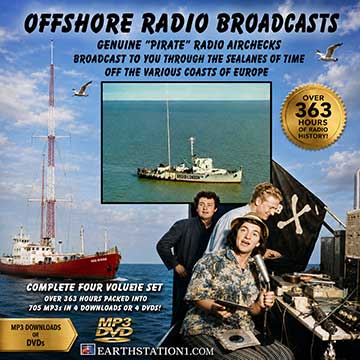
May 29, 1935: #BOTD: #HBD! Sylvia
Robinson, nick named "The Mother Of Hip Hop", African
American singer, songwriter, record producer, record label
executive and beauty, best known for her R & B chart toppers,
"Love Is Strange" (1957) as half of Mickey & Sylvia
and her solo record "Pillow Talk" (1973), and as founder
and CEO of the hip hop label Sugar Hill Records (d. September 29,
2011) is #born Sylvia Vanderpool in Harlem, New York City.
Robinson is credited as the driving force behind two landmark
singles in the hip hop genre: "Rapper's Delight" (1979)
by the Sugarhill Gang, and "The Message" (1982) by
Grandmaster Flash and the Furious Five. At the 11th Annual Rhythm
and Blues Awards Gala in 2000, she received a Pioneer Award for
her career in singing and for founding Sugarhill Records and in
2022, she was inducted into The Rock And Roll Hall Of Fame in the
Ahmet Ertegun Award category for being a major influence on the
creative development of hip-hop's early successes and is the
second woman to receive the honor, after Cynthia Weil. Sylvia
Robinson died in the morning at Meadowlands Hospital in Secaucus,
New Jersey due to congestive heart failure, aged 76. She is buried
at George Washington Memorial Park in Paramus, New Jersey.
https://store.earthstation1.com/offshore-pirate-radio-2-dual-layer-mp3-dvds-uk-amp-euro23.html
Today's
EarthStation1.com 15% Off Commemorative Memorial Title: Desert
Triumph: The Gulf War TV Documentary Series DVD & MP4 Download
Today, May 29, 2026
May 29, 1941: #BOTD: #HBD! Bob Simon,
American journalist, television correspondent for CBS News (d.
February 11, 2015) is #born Robert David Simon into a Jewish
family in The Bronx in New York City. He covered crises, war, and
unrest in 67 countries during his career. Simon reported the
withdrawal of American troops from Vietnam, the Israeli-Lebanese
Conflict in 1982, and the student protests in China's Tiananmen
Square in 1989. During the Persian Gulf War in 1991, he and four
of his TV crew were captured and imprisoned by Iraq for 40 days.
He published a book about the experience titled Forty Days. He
became a regular correspondent for CBS's 60 Minutes in 1996 and,
in 1999, for 60 Minutes II. At the time of his death in an auto
accident, he served as 60 Minutes senior foreign correspondent.
Simon is described as having been "a giant of broadcast
journalism" by CBS News President David Rhodes,. He is
recognized as one of the few journalists who have covered most of
the major overseas conflicts since 1969. For his extensive
reporting over a 47-year career, he earned more than 40 major
awards, including the Overseas Press Club award and 27 Emmy Awards
for journalism. Bob Simon died aged 73 in a car accident in
Manhattan, New York. Simon was discovered unconscious with severe
head injuries on the West Side Highway of Manhattan, New York. His
burial details are not publicly known. His for-hire driver had
lost control, resulting in a collision with another vehicle. Simon
was extracted from the roof of the limo by rescue workers and
transported to St. Luke's-Roosevelt Hospital, where he died a
short time later. The for-hire driver, Abdul Reshad Fedahi, who
survived the crash, had his driver's license suspended nine times
between 2011 and Simon's death. On Sale @ 15% Off Discount Till
Midnight PT!
https://store.earthstation1.com/desert-triumph-the-gulf-war-tv-documentary-series-dvd-amp-mp4-downloa4.html
Today's
EarthStation1.com 15% Off Commemorative Memorial Title: WABC Radio
Airchecks MP3 Collection 1960s-1980s DVD, MP3 Download, USB
Today, May 29, 2026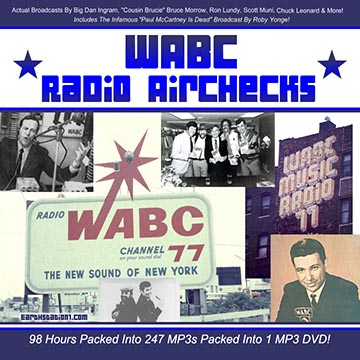
May 29. 1942: #BOTD: #HBD! Monti Rock
III, aka Disco Tex, Puerto Rican American musician and performer
(d. February 23, 2026) is #born Joseph Montanez, Jr. in the Bronx,
New York. The Very Reverend Sir Monti Rock III parlayed his role
as celebrity hairdresser into a center stage role. After several
appearances and performances on The Merv Griffin Show beginning in
1966, Rock's wild antics, which included throwing bananas into the
audience, and outrageous personality brought him to the national
stage when he began appearing regularly as a guest on The Tonight
Show. Monti Rock III is generally considered one of the first
disco artists to cross into the mainstream. In February 1975, Rock
released Disco-Tex & His Sex-O-Lettes Review, an LP of disco
songs and collaboration with producer Bob Crewe and featuring
musician Jerry Corbetta of Sugarloaf. Two of the album's tracks,
"Get Dancin'" and "I Wanna Dance Wit' Choo (Doo Dat
Dance)", became hit singles in the United States and instant
staples at burgeoning New York dance clubs including Studio 54.
The two songs were also Top 10 hits in the United Kingdom. By the
end of the 1970s, disco music was fully mainstream, and Rock
appeared in the movie Saturday Night Fever as the DJ. After
reinventing himself several times as "Monti Rock II",
"Monti Rock IV", "Monti Rock V", and "Sir
Monti Rock", Rock settled on just "Monti Rock".
Monti ultimately became an ordained minister, according to his
Facebook page. Rock was openly gay from the time he came out at
age 13. His partner, Bruce Moshman, died in the mid-2010s. Rock
died from complications of COPD at his home on South Buffalo Road
in Las Vegas at the age of 86. He had largely been bedridden since
breaking his hip in December 2024. He had been performing in Las
Vegas until his death. His burial details are not publicly
disclosed. On Sale @ 15% Off Discount Till Midnight PT!
https://store.earthstation1.com/wabc-musicradio-shows-mp3-dvd-60s80s-am-360807775.html
Today's
EarthStation1.com 15% Off Commemorative Memorial Title: Eyes On
The Prize II: America At The Racial Crossroads DVD MP4 USB
Today, May 29, 2026
May 29, 1973: Elections: Elections In The
United States: The 1973 Los Angeles Mayoral Election: -- Thomas
Bradley is elected the first and thus far only African American
mayor of Los Angeles, and the second black mayor of a major U.S.
city, when he wins the 1973 Los Angeles Mayoral Election. Thomas
Bradley (December 29, 1917 - September 29, 1998) was a politician
and police officer who served as the 38th Mayor of Los Angeles
from 1973 to 1993. His 20 years in office mark the longest tenure
by any mayor in the city's history. Bradley retired in 1993, after
his approval ratings began dropping subsequent to the 1992 Los
Angeles Riots. Bradley, a Democrat, also ran for Governor of
California in 1982 and 1986, but was defeated both times by
Republican candidate George Deukmejian. The racial dynamics that
appeared to underlie his narrow and unexpected loss in 1982 gave
rise to the political term "the Bradley effect" (less
commonly called the Wilder effect), a theory regarding
discrepancies between voter opinion polls and election outcomes in
US elections where a white and a non-white candidate run against
each other. In 1985, he was awarded the Spingarn Medal from the
NAACP. On Sale @ 15% Off Discount Till Midnight PT!
https://store.earthstation1.com/eyes-on-the-prize-ii-dvd-set-4-discs-complete-2nd-seri42.html
Today's
EarthStation1.com 15% Off Commemorative Memorial Title: Ronald
Reagan Documentary Biography DVD, Video Download, USB Drive
Today, May 29, 2026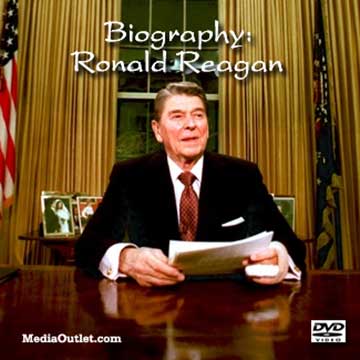
May 29, 1988: The Aftermath Of World War
II: The Cold War: The Dissolution Of The Soviet Union: The
Presidency Of Ronald Reagan: The Moscow Summit (1988) (The Moscow
Summit Of 1988): -- U.S. President Ronald Reagan begins his first
visit to the Soviet Union when he arrives in Moscow for the fourth
superpower summit with the Soviet leader Mikhail Gorbachev. Reagan
was viewed as a celebrity by the Soviets. A journalist asked the
president if he still considered the Soviet Union the evil empire.
"No," he replied, "I was talking about another
time, another era." At Gorbachev's request, Reagan gave a
speech on free markets at the Moscow State University. On Sale @
15% Off Discount Till Midnight PT!
https://store.earthstation1.com/ronald-reagan-dvd-tv-biography.html
Today's
EarthStation1.com 15% Off Commemorative Memorial Title: The Second
Russian Revolution TV Series DVD, Video Download, USB Drive
Today, May 29, 2026
May 29, 1990: The Aftermath Of World War
II: The Cold War: The Dissolution Of The Soviet Union: Russian
Presidential Elections: The 1990 Russian Presidential Election: --
Boris Yeltsin is elected president of the Russian Soviet
Federative Socialist Republic by the Congress of People's Deputies
of the Russian SFSR. On February 1, 1931, Boris Yeltsin, Soviet
and Russian politician and the first President of the Russian
Federation (d. April 23, 2007) was born Boris Nikolayevich Yeltsin
in the village of Butka, Talitsky District, Sverdlovsk Oblast,
Russia, then in the Russian Soviet Federative Socialist Republic.
Yeltsin served from 1991 to 1999. Originally a supporter of
Mikhail Gorbachev, Yeltsin emerged under the perestroika reforms
as one of Gorbachev's most powerful political opponents. During
the late 1980s, Yeltsin had been a member of the Politburo, and in
late 1987 tendered a letter of resignation in protest. No one had
resigned from the Politburo before. This act branded Yeltsin as a
rebel and led to his rise in popularity as an anti-establishment
figure. On 29 May 1990 he was elected the chairman of the Russian
Supreme Soviet. On 12 June 1991 he was elected by popular vote to
the newly created post of President of the Russian Soviet
Federative Socialist Republic (RSFSR), at that time one of the 15
constituent republics of the Soviet Union. Upon the resignation of
Mikhail Gorbachev and the final Dissolution Of The Soviet Union on
25 December 1991, the RSFSR became the sovereign state of the
Russian Federation, and Yeltsin remained in office as president.
He was reelected in the 1996 election, in which critics widely
claimed pervasive corruption; in the second round he defeated
Gennady Zyuganov from the revived Communist Party by a margin of
13.7%. However, Yeltsin never recovered his early popularity after
a series of economic and political crises in Russia in the 1990s.
He vowed to transform Russia's socialist economy into a capitalist
market economy and implemented economic shock therapy, price
liberalization, and nationwide privatization. Due to the sudden
total economic shift, a majority of the national property and
wealth fell into the hands of a small number of oligarchs. The
well-off millionaire and billionaire oligarchs likened themselves
to 19th century robber barons. Rather than creating new
enterprises, Yeltsin's democratization led to international
monopolies hijacking the former Soviet markets, arbitraging the
huge difference between old domestic prices for Russian
commodities and the prices prevailing on the world market. Much of
the Yeltsin era was marked by widespread corruption, and as a
result of persistent low oil and commodity prices during the
1990s, Russia suffered inflation, economic collapse, and enormous
political and social problems that affected Russia and the other
former states of the USSR. Within a few years of his presidency,
many of Yeltsin's initial supporters had started to criticize his
leadership, and Vice President Alexander Rutskoy even denounced
the reforms as "economic genocide". Ongoing
confrontations with the Supreme Soviet climaxed in the 1993
Russian constitutional crisis in which Yeltsin illegally ordered
the dissolution of the Supreme Soviet parliament, which as a
result attempted to remove him from office. In October 1993,
troops loyal to Yeltsin stopped an armed uprising outside of the
parliament building, leading to a number of deaths. Yeltsin then
scrapped the existing Russian constitution, banned political
opposition, and deepened his efforts to transform the economy. On
31 December 1999, under enormous internal pressure, Yeltsin
announced his resignation, leaving the presidency in the hands of
his chosen successor, then-Prime Minister Vladimir Putin. Yeltsin
left office widely unpopular with the Russian population. Yeltsin
kept a low profile after his resignation, though he did
occasionally publicly criticise his successor. Yeltsin died of
congestive heart failure on April 23, 2007. On Sale @ 15% Off
Discount Till Midnight PT!
https://store.earthstation1.com/the-second-russian-revolution-6-dvd-set-complete-tv-serie6.html
Today's
EarthStation1.com #OnThisDay Commemorative Memorial Title: Deputy
Dawg TV Cartoon Series MP4 Download 2 Disc DVD Set USB Drive
Today, May 29, 2026 May 29: National Alligator Day: -- This
day was established by Wild Florida Safari Park to raise awareness
of the importance of alligators to Florida's ecosystem, as well as
educate the public on all things gators. Alligators are one of the
largest and most ferocious types of lizards. They have been in
existence for over 35 million years, and have been living amongst
the people of Florida since the state was founded. They have made
their home within the area due to its natural water-bordered
environment and have become key eco-tourism attractions. These wet
and wild creatures of the water, although from the crocodilian
family, are not to be confused with their reptilian counterparts.
The only place where both animals coexist is in Southern Florida,
and Tamaulipas, Mexico. If you're thinking about where else you
might find these fascinating creatures, you would like to know
they are native to only three localities in the world - the United
States, Mexico, and China. The first appearance of alligators can
be seen 37 million years ago, however, researchers trace their
existence over 20 million years earlier. Despite a large number of
alligator species, only two have not yet gone extinct. The only
remaining alligator species are the American and Chinese
alligators, which are also the oldest species of alligators known
to science. The Chinese alligators are often smaller and lighter
in weight than the American alligators, which is the main
distinction between the two species. In America, alligators can be
found in some of the southeast states, such as Georgia, Alabama,
and Mississippi, but the largest number of alligators are located
in Louisiana and Florida, with over a million in each state.
Floridians can also be accredited with finding the name alligator,
as the first settlers in the state anglicized the word from the
Spanish term for 'the lizard.' The only airboat, gator, and
drive-through safari attraction in Florida is called Wild Florida.
It was founded more than ten years ago to enable Floridians and
guests to experience the state's wild side. Their gator park,
which has a variety of wildlife in addition to alligators, airboat
tours, and drive-through safari are their main draws. They also
founded National Alligator Day and National Airboat Day to spread
awareness about these issues.
https://store.earthstation1.com/deputy-dawg-dvd-set-2-discs-complete-terrytoons-cartoon-serie2.html
May 29: National Alligator Day: -- This
day was established by Wild Florida Safari Park to raise awareness
of the importance of alligators to Florida's ecosystem, as well as
educate the public on all things gators. Alligators are one of the
largest and most ferocious types of lizards. They have been in
existence for over 35 million years, and have been living amongst
the people of Florida since the state was founded. They have made
their home within the area due to its natural water-bordered
environment and have become key eco-tourism attractions. These wet
and wild creatures of the water, although from the crocodilian
family, are not to be confused with their reptilian counterparts.
The only place where both animals coexist is in Southern Florida,
and Tamaulipas, Mexico. If you're thinking about where else you
might find these fascinating creatures, you would like to know
they are native to only three localities in the world - the United
States, Mexico, and China. The first appearance of alligators can
be seen 37 million years ago, however, researchers trace their
existence over 20 million years earlier. Despite a large number of
alligator species, only two have not yet gone extinct. The only
remaining alligator species are the American and Chinese
alligators, which are also the oldest species of alligators known
to science. The Chinese alligators are often smaller and lighter
in weight than the American alligators, which is the main
distinction between the two species. In America, alligators can be
found in some of the southeast states, such as Georgia, Alabama,
and Mississippi, but the largest number of alligators are located
in Louisiana and Florida, with over a million in each state.
Floridians can also be accredited with finding the name alligator,
as the first settlers in the state anglicized the word from the
Spanish term for 'the lizard.' The only airboat, gator, and
drive-through safari attraction in Florida is called Wild Florida.
It was founded more than ten years ago to enable Floridians and
guests to experience the state's wild side. Their gator park,
which has a variety of wildlife in addition to alligators, airboat
tours, and drive-through safari are their main draws. They also
founded National Alligator Day and National Airboat Day to spread
awareness about these issues.
https://store.earthstation1.com/deputy-dawg-dvd-set-2-discs-complete-terrytoons-cartoon-serie2.html
Today's
EarthStation1.com #OnThisDay Commemorative Memorial Title: Lincoln
And The War Within: Election To Ft. Sumter DVD, MP4, USB Drive
Today, May 29, 2026May 29, 1866: #DOTD: #RIP: Winfield
Scott, United States Army general and the unsuccessful
presidential candidate of the Whig Party in 1852 (1786-1866) (b.
June 13, 1866) #dies at West Point of natural causes, age 79.
President Andrew Johnson ordered the flags flown at half-staff to
honor Scott, and Scott's funeral was attended by many of the
leading Union generals, including Grant, George G. Meade, George
H. Thomas, and John Schofield. He is buried at the West Point
Cemetery. Winfield Scott was born in Petersburg, Virginia. Known
as "Old Fuss and Feathers" and the "Grand Old Man
of the Army", he served in three wars: the War Of 1812, the
Mexican War, and the U.S. Civil War. He served on active duty as a
general longer than any other person in American history, is rated
as one of the Army's most senior commissioned officers, and is
ranked by many historians as the best American commander of his
time. Over the course of his 53-year career, he commanded forces
in the War Of 1812, the Black Hawk War, the Mexican-American War,
and the Second Seminole War. He was the army's senior officer at
the start of the American Civil War, and conceived the Union
strategy known as the Anaconda Plan, which was used to defeat the
Confederacy. He served as Commanding General of the United States
Army for twenty years, longer than any other holder of the office.
Scott was born and educated in Virginia; after brief attendance at
the College of William and Mary and study in a law office, he
attained admission to the bar. Scott practiced law briefly, and
served in the Virginia Militia during the Chesapeake-Leopard
Affair. In 1808, Scott was commissioned as a captain in the Light
Artillery. He rose to prominence during the War Of 1812, and
attained promotion to brigadier general. Scott remained in the
Army after the war, served in several command positions, and
carried out high level staff tasks, including frequent updates to
the Army's field regulations. After missing out on appointment as
the Army's commanding general in 1828, he received the appointment
in 1841; he served in this post until his retirement in 1861,
shortly after the start of the American Civil War. A national hero
after the Mexican-American War, he served as military governor of
Mexico City. His stature was so high that in 1852, the Whig Party
passed over its own incumbent President, Millard Fillmore to
nominate Scott as their candidate in that year's presidential
election. At six feet five inches, he remains the tallest man ever
nominated by a major party. Scott lost to Democrat Franklin Pierce
in the general election, but remained a popular national figure,
receiving a brevet promotion to lieutenant general in 1855,
becoming the first American since George Washington to hold that
rank. At the start of the Civil War, Scott took steps to defend
Washington, DC and ensure the successful inauguration of Abraham
Lincoln. Though too old and infirm to take the field, Scott served
as Lincoln's principal military adviser at the start of the war,
and conceived of the Anaconda Plan; though dismissed by critics
who regarded the plan's extended and prolonged blockade of
southern ports as too passive, Scott's idea was incorporated into
the overall Union strategy which brought about the defeat of the
Confederacy. During his years as commanding general, Scott took
great interest in the development of the United States Military
Academy (West Point). Following friction with senior field
commander George B. McClellan, Scott retired to West Point.
https://store.earthstation1.com/lincoln-and-the-war-within-election-to-sumter-dvd-mp4-us4.html
Today's
EarthStation1.com #OnThisDay Commemorative Memorial Title: The
Making Of The President 1964 POTUS Campaign LBJ DVD, Download, USB
Today, May 29, 2026May 29, 1998: #DOTD: #RIP: Barry
Goldwater, American Air Force general, politician, businessman,
author and Freemason who was a five-term Senator from Arizona
(1953-1965, 1969-1987) and the Republican Party nominee for
president of the United States in 1964 (b, January 2, 1909) #dies
at the age of 89 at his long-time home in Paradise Valley,
Arizona, of complications from a stroke. His funeral was
co-officiated by both a reverend and a rabbi. His ashes were
buried at the Episcopal Christ Church of the Ascension in Paradise
Valley, Arizona. A memorial statue set in a small park has been
erected to honor the memory of Goldwater in that town, near his
former home and current resting place. He was born Barry Morris
Goldwater in Phoenix in what was then the Arizona Territory, the
son of Baron M. Goldwater and his wife, Hattie Josephine "JoJo"
Williams. His father's family founded Goldwater's Department
Store, a leading upscale department store in Phoenix. Goldwater's
paternal grandfather, Michel Goldwasser, a Polish Jew, was born in
1821 in Konin, then part of Congress Poland, he emigrated to
London following the Revolutions of 1848. Soon after arriving in
London, Michel anglicized his name to Michael Goldwater. Michel
married Sarah Nathan, a member of an English-Jewish family, in the
Great Synagogue of London. The Goldwaters later emigrated to the
United States, first arriving in San Francisco, California before
finally settling in the Arizona Territory, where Michael Goldwater
opened a small department store that was later taken over and
expanded by his three sons, Henry, Baron and Morris. Morris
Goldwater (1852-1939) was an Arizona territorial and state
legislator, mayor of Prescott, Arizona, delegate to the Arizona
Constitutional Convention and later President of the Arizona State
Senate. Goldwater's father, Baron, was Jewish; but he was raised
in his mother's Episcopalian faith. Hattie Williams came from an
established New England family that included the theologian Roger
Williams of Rhode Island. Goldwater's parents were married in an
Episcopal church in Phoenix; for his entire life, Goldwater was an
Episcopalian, though on rare occasions he referred to himself as
Jewish. While he did not often attend church, he stated that "If
a man acts in a religious way, an ethical way, then he's really a
religious man - and it doesn't have a lot to do with how often he
gets inside a church.". Despite Barry Goldwater's loss of the
1964 presidential election in a landslide, Goldwater is the
politician most often credited with having sparked the resurgence
of the American conservative political movement in the 1960s. He
also had a substantial impact on the libertarian movement.
Goldwater rejected the legacy of the New Deal and, along with the
conservative coalition, fought against the New Deal coalition. A
member of the NAACP and active supporter of desegregation in
Phoenix, Goldwater voted in favor of the Civil Rights Act Of 1957
and the 24th Amendment to the U.S. Constitution, but opposed the
Civil Rights Act Of 1964, believing it to be an overreach by the
federal government - a decision that considerably anguished him.
In 1964, Goldwater mobilized a large conservative constituency to
win the hard-fought Republican presidential primaries. Although
raised as an Episcopalian, Goldwater was the first candidate of
ethnically Jewish heritage to be nominated for President by a
major American party (his father was Jewish). Goldwater's platform
ultimately failed to gain the support of the electorate and he
lost the 1964 presidential election to incumbent Democrat Lyndon
B. Johnson by one of the largest margins in history. Goldwater
returned to the Senate in 1969 and specialized in defense and
foreign policy. As an elder statesman of the party, Goldwater
successfully urged President Richard Nixon to resign in 1974 when
evidence of a cover-up in the Watergate scandal became
overwhelming and impeachment was imminent. Goldwater narrowly won
re-election in 1980 for what would be his final and most
influential term in the senate. In 1986, Goldwater oversaw passage
of the Goldwater-Nichols Act, arguably his most significant
legislative achievement. The following year, he retired from the
Senate and was succeeded by John McCain, who praised his
predecessor as the man who "transformed the Republican Party
from an Eastern elitist organization to the breeding ground for
the election of Ronald Reagan". Goldwater strongly supported
the 1980 presidential campaign of Reagan, who had become the
standard-bearer of the conservative movement after his "A
Time for Choosing" speech. Reagan reflected many of the
principles of Goldwater's earlier run in his campaign. The
Washington Post columnist George Will took note of this, writing:
"We [...] who voted for him in 1964 believe he won, it just
took 16 years to count the votes". He belonged to both the
York Rite and Scottish Rite of Freemasonry, and was awarded the
33rd degree in the Scottish Rite. Goldwater's views grew
increasingly libertarian as he neared the end of his career. After
leaving the Senate, Goldwater's views cemented as libertarian. He
criticized the "moneymaking ventures by fellows like Pat
Robertson and others [in the Republican Party] who are trying
to...make a religious organization out of it." He lobbied for
homosexuals to be able to serve openly in the military, opposed
the Clinton administration's plan for health care reform,
supported abortion rights and the legalization of medicinal
marijuana.
https://store.earthstation1.com/the-making-of-the-president-1964-dvd-johnson-goldwater-campa1964.html
Today's
EarthStation1.com #OnThisDay Commemorative Memorial Title: When
Baseball Went To War: Baseball & Its Players During WWII MP4
DVD
Today, May 29, 2026May 29, 1972: #DOTD: #RIP: Moe Berg,
American professional baseball catcher and coach in Major League
Baseball, spy for The Office Of Strategic Services (OSS) during
World War II (b. March 2, 1902) #dies at the age of 70 from
injuries sustained in a fall at home. A nurse at the Belleville,
New Jersey, hospital where he died recalled his final words as:
"How did the Mets do today?" (they won). By his request,
his remains were cremated and spread over Mount Scopus in
Jerusalem, Israel. Moe Berg was born Morris Berg in New York City,
the third and youngest child of Bernard Berg, a pharmacist who
emigrated from Ukraine, and his wife Rose (nee Tashker), a
homemaker, both Jewish, who lived in Harlem a few blocks from the
Polo Grounds. He played 15 seasons in the major leagues, almost
entirely for four American League teams, though he was never more
than an average player and was better known for being "the
brainiest guy in baseball." Casey Stengel once described Berg
as "the strangest man ever to play baseball" (which is
ironic, coming from him of all people! ;) ). Berg was a graduate
of Princeton University and Columbia Law School, spoke several
languages, and regularly read ten newspapers a day. His reputation
as an intellectual was fueled by his successful appearances as a
contestant on the radio quiz show Information Please, in which he
answered questions about the etymology of words and names from
Greek and Latin, historical events in Europe and the Far East, and
ongoing international conferences. As a spy working for the
government of the United States, he prepared maps of Tokyo when
travelling there to teach baseball seminars in 1932. Berg traveled
to Yugoslavia to gather intelligence on resistance groups which
the U.S. government was considering supporting. He was sent on a
mission to Italy, where he interviewed various physicists
concerning the German nuclear weapons program. After the war, Berg
was occasionally employed by the Central Intelligence Agency,
successor to the Office of Strategic Services. After the war, the
OSS was disbanded. Berg was awarded The Medal Of Freedom, the
highest honor given to civilians during wartime, from President
Harry S. Truman for his service. He declined to accept it without
any public explanation. The citation read: "Mr. Morris Berg,
United States Civilian, rendered exceptionally meritorious service
of high value to the war effort from April 1944 to January 1946.
In a position of responsibility in the European Theater, he
exhibited analytical abilities and a keen planning mind. He
inspired both respect and constant high level of endeavor on the
part of his subordinates which enabled his section to produce
studies and analysis vital to the mounting of American
operations." After his death, his sister, Ethel, requested
and accepted the award on his behalf, later donating it to The
Baseball Hall Of Fame.
https://store.earthstation1.com/when-baseball-went-to-war-baseball-and-its-players-during-wwii-mp4-dvd.html
Today's
EarthStation1.com #OnThisDay Commemorative Memorial Title:
Soldiers: A History Of Men In Battle TV Series + Bonus Title DVD
MP4
Today, May 29, 2026May 29, 1914: #DOTD: #RIP: Paul Mauser,
German engineer, weapon designer, manufacturer, industrialist and
politician who made signficant contributions to gun design and
manufacture (b June 27, 1838) dies aged 75 in Oberndorf am Neckar,
German Empire, 2 months before World War 1 started. He is buried
at Oberndorf Valley Cemetery in Oberndorf am Neckar, German
Empire, where he had been born Peter Paul von Mauser when it was
part of The Kingdom Of Wurttemberg. He and his brother Wilhelm
both became gunsmiths, and the two developed various firearms and
founded the company Gebr Mauser, which finally took over from the
royal manufacture. Together with his brother Wilhelm Mauser, Peter
Paul Mauser designed the Mauser Model 1871 rifle, the first of a
successful line of Mauser rifles and pistols. The rifle was
adopted as the Gewehr 71 or Infanterie-Gewehr 71 and was the first
metal cartridge weapon of the German Empire. While Wilhelm handled
the business side of the factory, Paul proved to be the more
technically capable engineer, and he made significant
contributions to bolt action rifle design and successfully
combined and improved various bolt action engineering concepts.
The Mauser company bolt action development resulted in the Gewehr
98 and Karabiner 98k rifle series that were the latest in a line
of Mauser bolt-action rifles that started with the Mauser Model
1889 and were adapted in 1889 and the 1890s as service rifles by
several countries. The bolt-action design used for the Gewehr 98
was patented by Paul Mauser on September 9, 1895. Besides rifles,
Paul Mauser also developed handguns, with the first Mauser
designed handgun being the Mauser C78 revolver. In 1896, Paul
Mauser would develop the C96 pistol, which was one of the first
semi-automatic pistols in history. Initially, Mauser's designs
were more successful abroad than in Prussia, but the Prussian
Rifle Review Board in Spandau opted for the domestically developed
1888 rifle. Mauser designed an improved model of this rifle for
the Imperial Order . The name of Mauser is inseparable from the
construction of the 1893 infantry rifle for Spain, 1894 carbine
and 1896 infantry rifle for Sweden, with model rifles for Peru,
Belgium, Argentina, the Brazil (1894), Chile (1895), then Costa
Rica, the Dominican Republic, El Salvador, Guatemala, Honduras,
Nicaragua, Venezuela, Mexico (1902), Uruguay and Turkey.
Deliveries to these countries make the Mauser name a
world-renowned guarantee of quality for precise weapons. The
construction of the Gewehr 98 rifle was personally praised by
Kaiser Wilhelm II on April 5, 1898. Mauser lost his left eye in
1901 as a result of a cartridge explosion during a test firing of
the self-loading C98. Mauser also designed the 7.65_53mm Mauser
(1889) and 7_57mm Mauser (1892) rifle cartridges. These cartridges
were high-performance service cartridge designs compared to other
contemporary smokeless powder service cartridges such as the 8mm
Lebel (1886), 8_50mmR Mannlicher (1890) and .303 British (1891).
Mauser was a member of the German Reichstag for the National
Liberal Party from 1898 to 1903, a party that appeared in the
Kingdom of Wurttemberg as a German party. In the Reichstag, he
represents the 8th district of Wurttemberg (Freudenstadt, Horb,
Oberndorf, and Sulz). He was nominated as a candidate thanks to an
alliance of the Conservatives, the Farmers' Federation, and the
National Liberals and after his election to the Reichstag he
joined the Group of National Liberals as a guest.
https://store.earthstation1.com/soldiers-a-history-of-men-in-battle-4-dvds-all-13-sh413.html
Today's
EarthStation1.com #OnThisDay Commemorative Memorial Title: The
Berlin Wall w/Mike Wallace JFK Ich Bin Ein Berliner & More MP4
DVD
Today, May 29, 2026May 29, 1994: #DOTD: Erich Honecker,
German communist politician who led the German Democratic Republic
(East Germany) from 1971 until shortly before the fall of the
Berlin Wall in October 1989 (b. August 25, 1912) #dies in exile in
Santiago, Chile of terminal liver cancer, aged 81. His remains
were cremated, and the final disposition of his ashes are not
publicly known. Erich Honecker was born Erich Ernst Paul Honecker
in what is now Saarland, Germany. Following German reunification
in 1990, Honecker had sought asylum in the Chilean embassy in
Moscow, but was extradited back to Germany in 1992, after the fall
of the Soviet Union, to stand trial for his role in the human
rights abuses committed by the East German government. However,
the proceedings were abandoned due to Honecker's illness. He was
freed from custody to join his family in exile in Chile, where he
died. Erich Honecker was born Erich Ernst Paul Honecker in what is
now Saarland, Germany. He held the posts of General Secretary of
the Socialist Unity Party of Germany (SED) and Chairman of the
National Defence Council; in 1976, he replaced Willi Stoph as
Chairman of the State Council, the official head of state. As the
leader of East Germany, Honecker had close ties to the Soviet
Union, which maintained a large army in the country. Honecker's
political career began in the 1930s when he became an official of
the Communist Party of Germany, a position for which he was
imprisoned by the Nazis. Following World War II, he was freed by
the Soviet army and relaunched his political activities, founding
the SED's youth organisation, the Free German Youth, in 1946 and
serving as the group's chairman until 1955. As the Security
Secretary of the SED Central Committee, he was the prime organiser
of the building of the Berlin Wall in 1961 and, in this function,
bore administrative responsibility for the "order to fire"
along the Wall and the larger inner German border. In 1970,
Honecker initiated a political power struggle that led, with
support of Soviet leader Leonid Brezhnev, to him replacing Walter
Ulbricht as General Secretary of the SED and chairman of the
National Defence Council. Under his command, the country adopted a
programme of "consumer socialism" and moved towards the
international community by normalizing relations with West Germany
and also becoming a full member of the UN, in what is considered
one of his greatest political successes. As Cold War tensions
eased in the late 1980s with the advent of perestroika and
glasnost - the liberal reforms introduced by Soviet leader Mikhail
Gorbachev - Honecker refused all but cosmetic changes to the East
German political system. He cited the continual hardliner
attitudes of Kim Il-Sung and Fidel Castro, whose respective
regimes of North Korea and Cuba had been critical of reforms. As
anti-government protests grew, Honecker begged Gorbachev to
intervene with the Soviet army to suppress the protests to
maintain communist rule in East Germany as Moscow had done with
Czechoslovakia in the Prague Spring of 1968 and with the Hungarian
Revolution Of 1956, but Gorbachev refused. Honecker was forced to
resign by the SED Politburo in October 1989 in a bid to improve
the government's image in the eyes of the public; the effort was
unsuccessful, and the regime would collapse entirely the following
month.
https://store.earthstation1.com/the-berlin-wall-documentary-mike-wallace-dvd-mp4-download-usb-driv4.html
Today's
EarthStation1.com #OnThisDay Commemorative Memorial Title:
Butterfly: The European Myth Of The Oriental Woman DVD, MP4, USB
Drive
Today, May 29, 2026May 29, 1911: #DOTD #RIP: W. S. Gilbert,
English dramatist, librettist, poet and illustrator, best known
for his collaboration with composer Arthur Sullivan, which
produced fourteen comic operas (b. November 18, 1836) #dies while
giving a swimming lesson in the lake of his home, Grim's Dyke in
northwest London, England, to two young women, Winifred Isabel
Emery (1890-1972) and the future Lady Spencer, 17-year-old Ruby
Preece. When Preece got into difficulties and called for help,
Gilbert dived in to save her but suffered a heart attack in the
middle of the lake and died at the age of 74. He was cremated at
Golders Green and his ashes buried at the churchyard of St. John's
Church, Stanmore. The inscription on Gilbert's memorial on the
south wall of the Thames Embankment in London reads: "His Foe
was Folly, and his Weapon Wit". There is also a memorial
plaque at All Saints' Church, Harrow Weald. Groucho Marx was a big
fan of Gilbert and Sullivan, and appeared as Ko-Ko, the Lord High
Executioner, in a televised production of The Mikado on NBC's Bell
Telephone Hour. W. S. Gilbert was born William Schwenck Gilbert in
London, England. Sir William Schwenck Gilbert wrote the verses for
the famed Gilbert and Sullivan comic operas, known as the Savoy
operas, which poked fun at the English establishment. Among their
operas; H.M.S. Pinafore, The Pirates of Penzance, Iolanthe, The
Mikado and The Yeoman of the Guard.
https://store.earthstation1.com/butterfly-the-european-myth-of-the-oriental-woman-dvd.html
Today's
EarthStation1.com #OnThisDay Commemorative Memorial Title: The
Gulf Crisis: The Road To War TV Series + Bonus 2 DVDs MP4 Download
Today, May 29, 2026May 28-30, 1990: The Aftermath Of World
War II: The Cold War: The Origins Of The Gulf War (The Persian
Gulf War, Gulf War I): Events Leading To The Gulf War: The Arab
League: The 1990 Arab League Summit (The Emergency Arab Summit
Conference): -- Iraqi president Saddam Hussein says that oil
overproduction by Kuwait and United Arab Emirates was "economic
warfare" against Iraq by exceeding its OPEC quotas for oil
production. In order for the cartel to maintain its desired price
of 18USD per barrel, discipline was required. The United Arab
Emirates and Kuwait were consistently overproducing; the latter at
least in part to repair losses caused by Iranian attacks in the
Iran-Iraq War and to pay for the losses of an economic scandal.
The result was a slump in the oil price - as low as 10USD per
barrel - with a resulting loss of 7B ISD a year to Iraq, equal to
its 1989 balance of payments deficit. Resulting revenues struggled
to support the government's basic costs, let alone repair Iraq's
damaged infrastructure. Jordan and Iraq both looked for more
discipline, with little success. The Iraqi government described it
as a form of economic warfare, which it claimed was aggravated by
Kuwait slant-drilling across the border into Iraq's Rumaila oil
field. According to oil workers in the area, Iraq's slant drilling
claim was fabricated, as "oil flows easily from the Rumaila
field without any need for these techniques." At the same
time, Saddam looked for closer ties with those Arab states that
had supported Iraq in the war. This move was supported by the US,
who believed that Iraqi ties with pro-Western Gulf states would
help bring and maintain Iraq inside the US' sphere of influence.
https://store.earthstation1.com/the-gulf-crisis-the-road-to-war-tv-documentary-series-dvd-mp4-us4.html
Today's
EarthStation1.com #OnThisDay Commemorative Memorial Title:
Offshore Pirate Radio 1960s-1980s MP3s DVD, Audio Download, USB
Drive
Today, May 29, 2026May 29, 1945: #BOTD: #HBD! Gary Brooker,
English singer and pianist, and the founder and lead singer of the
rock band Procol Harum (d. February 19, 2022) is #born in Hackney
Hospital, East London, England. Gary Brooker MBE founded the
Paramounts in 1962 with his guitarist friend, Robin Trower. The
band gained respect within the burgeoning 1960s British R & B
scene, which yielded the Beatles, the Animals, the Spencer Davis
Group, the Rolling Stones, and many others. The Rolling Stones, in
particular, were Paramounts fans, sharing the stage with them
several times in the early 1960s. In 1966, Brooker founded Procol
Harum with his friend Keith Reid. The group named themselves
"Procul Harum" after a male blue Burmese cat, which had
been bred by Eleonore Vogt-Chapman and belonged to Liz Coombes, a
friend. Stevens suggested the group name themselves after the cat,
which the group immediately accepted. However, the cat's pedigree
name was in fact "Procul Harun", the "Procul"
being the breeder's prefix, but since the name was taken down over
the telephone, this led to a misspelling. Although people informed
the band that the name is Latin for "beyond these things",
this is incorrect, as the correct term would be "Procul His".
"A Whiter Shade of Pale" is the worldwide hit for which
Procol Harum is best known, but Brooker's melancholic vocals and
emotive, eclectic piano playing were a key part of the band's
musical mix. In the early years Brooker, Hammond organist Matthew
Fisher, and Trower were the guiding musical forces behind the
band, but after disparities in style became too much and Fisher
and Trower left, Brooker was the clear leader. Brooker started a
solo career and released the album No More Fear of Flying in 1979.
The same year, Brooker joined friend and neighbour Eric Clapton's
band. With Brooker in the lineup, they released the studio album
Another Ticket. Clapton fired the entire band in 1981, but he and
Brooker remained good friends afterwards, and were for many years
neighbours in the Surrey Hills. Brooker joined Clapton for several
one-off benefit gigs over the years. Brooker sang lead vocal on
the Alan Parsons Project song "Limelight", on their 1985
album, Stereotomy. Brooker sang the lead vocal of the song "No
News from the Western Frontier", a single taken from the
album Hi-Tec Heroes by the Dutch performer Ad Visser. A new
incarnation of Procol Harum, led by Brooker, continued touring the
world, celebrating its 40th anniversary in July 2007 with two days
of musical revels at St John's, Smith Square, in London. Brooker
also toured with Ringo Starr's All-Starr Band in 1997 and 1999,
and he was also a member of Bill Wyman's Rhythm Kings for several
years, appearing on three of their albums and touring with the
band. On September 28, 1996, as the Gary Brooker Ensemble, he
organised a charity concert to raise funds for his local church,
St Mary and All Saints, in Surrey. The resulting live CD of the
concert, Within Our House, originally released on a fan club CD in
a limited run of 1000 units, later became a collectable recording.
His guests and supporting artists included Dave Bronze, Michael
Bywater, Mark Brzezicki, and Robbie McIntosh. Also in 1996,
Brooker appeared in the Alan Parker film adaptation of Andrew
Lloyd Webber's Evita starring Madonna, Jonathan Pryce, and Antonio
Banderas. Playing the part of Juan Atilio Bramuglia, he sang the
song "Rainbow Tour" with Peter Polycarpou and Antonio
Banderas. Brooker said that his greatest single earning in his
career was from his appearance in the film. Brooker contributed to
George Harrison's albums All Things Must Pass (1970), Somewhere in
England (1981) and Gone Troppo (1982). On November 29, 2002 he was
among musicians and singers participating in the Harrison tribute
concert, Concert for George, at which he sang lead vocals on their
version of "Old Brown Shoe". In 2005, former Procol
Harum organist Matthew Fisher filed suit in the High Court against
Brooker and his publisher, claiming that he co-wrote the music for
the song. Fisher won the case on December 20, 2006 but was awarded
40% of the composers' share of the music copyright, rather than
the 50% he was seeking, and was not granted royalties for the
period before 2005. Gary Brooker died from cancer at his home in
Surrey at the age of 76. His cremains were given to his widow
Francoise Riedo ("Franky"), a Swiss au pair whom he met
circa 1965 and married in 1968. The couple had no children.
https://store.earthstation1.com/offshore-pirate-radio-2-dual-layer-mp3-dvds-uk-amp-euro23.html
Today's
EarthStation1.com #OnThisDay Commemorative Memorial Title: Butch
Cassidy The Wild Bunch & The Sundance Kid DVD Video Download
Today, May 29, 2026May 29, 2021: #DOTD: #RIP: B. J. Thomas,
American singer (b. August 7, 1942) #dies of stage IV lung cancer
at his home in Arlington, Texas, at the age of 78. His burial
details are not publicly known. B. J. Thomas was born Billy Joe
Thomas in Hugo, Oklahoma,. He is widely known for his hit songs of
the 1960s and 1970s, which appeared on the pop, country, and
Christian music charts, and included recordings of the Mark James
song "Hooked on a Feeling" (1968) and the Burt Bacharach
and Hal David song they wrore for the 1969 film Butch Cassidy and
the Sundance Kid "Raindrops Keep Fallin' on My Head"
(1969).
https://store.earthstation1.com/butch-cassidy-the-wild-bunch-amp-the-sundance-kid-dvd-video-download.html
Today's
EarthStation1.com #OnThisDay Commemorative Memorial Title:
Offshore Pirate Radio 1960s-1980s MP3s DVD, Audio Download, USB
Drive
Today, May 29, 2026May 29, 1949: #BOTD: #HBD! Francis Rossi,
best known as the co-founder, lead singer and lead guitarist of
the rock band Status Quo, author of the song "Pictures Of
Matchstick Men" which hit the charts in both the UK and the
US in 1968, launching their hit-making career, is born Francis
Dominic Nicholas Michael Rossi in Forest Hill, London. Status Quo
are a British rock band that formed in 1962. The group originated
in London as The Scorpions and was founded by Francis Rossi and
Alan Lancaster while they were still schoolboys. After a number of
lineup changes, which included the introduction of John Coghlan in
1963 and Rick Parfitt in 1967, the band became The Status Quo in
1967 and Status Quo in 1969. As of 2022, the group have been
active for 60 consecutive years (despite announcing a breakup in
1984, they would play Live Aid the following year and resume
normal activities in 1986). They have had over 60 chart hits in
the UK - more than any other rock band - including "Pictures
of Matchstick Men", "Down Down", "Rockin' All
Over the World", "Whatever You Want", "In the
Army Now", and "What You're Proposing". Twenty-two
of these reached the Top 10 in the UK Singles Chart, and
fifty-seven reached the Top 40. They have released over 100
singles and 33 albums, most of which were bestsellers. Since
reaching number 5 on the UK albums chart in 1972 with Piledriver,
Status Quo have achieved a career total of 25 UK top ten albums,
extending all the way up to their most recent release, Backbone,
in 2019. As of 2015, they were one of only 50 artists to have ever
achieved more than 500 total weeks on the UK Albums Chart. With
their various records for both single and album releases, Status
Quo are one of the most successful bands of all time in the UK. In
July 1985 the band opened Live Aid at Wembley Stadium with
"Rockin' All Over the World". In 1991, Status Quo
received a Brit Award for Outstanding Contribution to Music.
Status Quo appeared on the BBC's Top of the Pops more than any
other band. Their success and longevity as well, in part, as their
connections to the British Royal Family, including philanthropic
work with the Prince's Trust, have seen them frequently described
as a "national institution" by the media. Francis
Rossi's desire to become a musician began after seeing The Everly
Brothers live on television at a young age, after which he asked
his parents to buy him a guitar for Christmas. In 1962, while
attending Sedgehill Comprehensive School, Rossi became close
friends with future Status Quo bassist Alan Lancaster while
playing trumpet in the school orchestra. The two, along with other
classmates Alan Key (drums) and Jess Jaworski (keyboards), formed
a band called the Scorpions, who played their first gig at the
Samuel Jones Sports Club in Dulwich. Key was later replaced by Air
Cadets drummer and future Quo member John Coghlan, and the band
was renamed the Spectres. The Spectres wrote their own material
and played live shows; the line-up soon included Redhill-based
keyboard player Roy Lynes, whom they had seen performing with a
band called the Echoes who were also based in Redhill. In 1965,
the Spectres played at a Butlins holiday camp in Minehead. There
Rossi met his future long-time Status Quo partner Rick Parfitt,
who was playing as part of another band, the Highlights. The two
became close friends and agreed to continue working together. In
1966, the Spectres signed a five-year deal with Piccadilly
Records, releasing three singles that failed to chart. The group
again changed their name, this time to Traffic Jam, after
embracing psychedelia. In 1967, Traffic Jam changed its name to
The Status Quo, but eventually dropped the definite article.
Shortly afterward Parfitt joined the band, completing the original
line-up, and beginning an almost 50-year partnership with Rossi
until Parfitt's death in 2016. After some years of minor success,
the band reached #5 in the album charts in 1972 with Piledriver.
Released on Vertigo Records, it included "Paper Plane",
a song penned by Rossi and Bob Young, which was released as a
single. Status Quo continued to enjoy major success in the UK,
Europe, Japan, Australia and New Zealand through the 1970s and
1980s. They were the opening act of 1985's Live Aid, and Rossi
wrote and co-wrote some of their biggest hits, including
"Caroline" and the band's only number one single, "Down
Down". Rossi and Parfitt were the only remaining original
members in the band until Parfitt's death in 2016. In 2013 and
2014, Rossi and Parfitt reunited with original Quo bandmates
Lancaster and Coghlan for a series of reunion concerts. Over their
career, Status Quo have sold over 128 million albums worldwide.
https://store.earthstation1.com/offshore-pirate-radio-2-dual-layer-mp3-dvds-uk-amp-euro23.html
Today's
EarthStation1.com #OnThisDay Commemorative Memorial Title: My
Wicked, Wicked Ways The Legend Of Errol Flynn Docudrama DVD MP4
USB
Today, May 29, 2026May 29, 1942: #DOTD: #RIP: John
Barrymore, American actor of stage, screen and radio (b. February
14 or 15, 1882) #dies at Hollywood Presbyterian Hospital of
cirrhosis of the liver and kidney failure, complicated by
pneumonia, aged 60. Although Errol Flynn's memoirs claim film
director Raoul Walsh "borrowed" Barrymore's body before
burial to leave his corpse propped in a chair for a drunken Flynn
to discover when he returned home, Gene Fowler, a close friend of
Barrymore, stayed with the body all night and denied the story.
However, in a 2020 interview for the YouTube series Hot Ones,
John's granddaughter Drew Barrymore claimed the Flynn account was
accurate. Barrymore was buried at Calvary Cemetery in Los Angeles
on June 2, 1942. In 1980, Barrymore's son had his father's body
reinterred to the family plot in Philadelphia's Mount Vernon
Cemetery. John Barrymore was born John Sidney Blyth in the
Philadelphia home of his maternal grandmother Louisa Lane Drew.
Known by family, friends and colleagues as "Jack", John
Barrymore was a member of the Drew and Barrymore theatrical
families, he initially tried to avoid the stage, and briefly
attempted a career as an artist, but appeared on stage together
with his father Maurice in 1900, and then his sister Ethel the
following year. He began his career in 1903 and first gained
attention as a stage actor in light comedy, then high drama,
culminating in productions of Justice (1916), Richard III (1920)
and Hamlet (1922); his portrayal of Hamlet led to him being called
the "greatest living American tragedian". After a
success as Hamlet in London in 1925, Barrymore left the stage for
14 years and instead focused entirely on films. In the silent film
era, he was well received in such pictures as Dr. Jekyll and Mr.
Hyde (1920), Sherlock Holmes (1922) and The Sea Beast (1926).
During this period, he gained his nickname, the Great Profile. His
stage-trained voice proved an asset when sound films were
introduced, and three of his works, Grand Hotel (1932), Twentieth
Century (1934) and Midnight (1939) have been inducted into the
National Film Registry. Barrymore's personal life has been the
subject of much attention before and since his death. He struggled
with alcohol abuse from the age of 14, was married and divorced
four times, and declared bankruptcy later in life. Much of his
later work involved self-parody and the portrayal of drunken
has-beens. His obituary in The Washington Post observed that "with
the passing of the years - and as his private life became more
public - he became, despite his genius in the theater, a tabloid
character." Although film historians have opined that
Barrymore's "contribution to the art of cinematic acting
began to fade" after the mid-1930s, Barrymore's biographer,
Martin Norden, considers him to be "perhaps the most
influential and idolized actor of his day".
https://store.earthstation1.com/my-wicked-wicked-ways-the-legend-of-errol-flynn-dvd-2-disc2.html
Thu, 28 May 2026 03:36:00 PDT
May 29, 1972: #DOTD: #RIP: Hound Dog
Lorenz, rock 'n' radio disc jockey, particularly popular in the
American northeast during the 1950s and 1960s, known for his catch
phrase "The Hound's Around" (b. October 22, 1919) #dies
in his sleep at his home in Baitz Avenue in Buffalo, New York,
aged 62. His burial details are not known. Hound Dog Lorenz s born
George Lorenz to Fredrick and Lillian Lorenz. In the mid to late
1940s, George Hound Dog Lorenz started his career at WXRA in
Buffalo. On January 24, 1948, the same day his daughter was #born,
George Lorenz would start at WJJL in Niagara Falls, NY where he
had a morning show. He was known at this time as Ol Man Lorenz. At
the same time he promoted a country western show in Tonawanda, NY.
George was a big fan of Hank Williams Senior. In 1951, after a few
years at WJJL, George Lorenz would become known as the Hound Dog.
The nickname had it roots in a 1940s expression doggin around.
While at WJJL, George Hound Dog Lorenz was also on the air in
Cleveland, OH from 1953 to 1955. During this time, Rock 'n' Roll
was born. In 1955, The Hound joined WKBW in Buffalo, NY. WKBW
would propel the Hound even further. A powerful station, WKBW was
heard in 20 states and Canada. The Eastern Seaboard was rocking to
the sounds the Hound played. His fan club grew to record numbers
at this time. During his time a WKBW he would also begin to
syndicate his show. Until 1958, George Lorenz called WKBW home. In
July 1958, WKBW would change to a top 40 format. Before the change
over, The Hound left the station. He felt top 40 "is hurting
the record industry, is lowering radio listening, and is
decreasing a new artists chance to make it" (Billboard
Magazine). The Hound found himself at WINE in Williamsville, NY
(just outside Buffalo) until 1960. After WINE, he started World
Wide Programming, where he continued to syndicate the Hound Dog
Show. In 1962, George applied for the last FM frequency in the
Buffalo market, 93.7 FM. On December 10, 1964, WBLK 93.7 FM went
on the air, and the Hound Dog had his own radio station. Around
this time, he also created a industry paper called Behind the
Scenes. He operated the station until he passed away.
https://store.earthstation1.com/dj-radio-airchecks-mp3-dvd-1950s60s70s-dis319506070.html
Today's
EarthStation1.com #OnThisDay Commemorative Memorial Title: Classic
Baby Boomer Bloopers Video Collection DVD, Download, USB Drive
Today, May 29, 2026May 29, 2008: #DOTD: #RIP: Harvey Korman,
Jewish American actor and comedian who performed in television and
film productions (b. February 15, 1927) #dies at age 81 at UCLA
Medical Center as the result of complications from a ruptured
abdominal aortic aneurysm he had suffered four months earlier. He
is interred at Santa Monica's Woodlawn Cemetery. He was born
Harvey Herschel Korman in Chicago into a family of Russian Jewish
descent. His big break was being a featured performer on CBS' The
Danny Kaye Show. But he is best remembered for his performances on
the sketch comedy series The Carol Burnett Show, for which he won
a Golden Globe award and four Emmy Awards for Outstanding
Achievement by a supporting performer in a music or variety show,
as well as his partnership with Tim Conway. Korman also appeared
in several comedy films by Mel Brooks, appearing as the villainous
Hedley Lamarr in the 1974 film Blazing Saddles, Dr. Charles
Montague in High Anxiety (1977) and Count de Monet in History of
the World, Part 1 (1981). He also reunited with fellow Carol
Burnett Show alumnus Tim Conway, making a guest appearance on
Conway's 1980-1981 comedy-variety series The Tim Conway Show. The
two later toured the U.S. reprising skits from the show as well as
performing new material. A DVD of new comedy sketches by Korman
and Conway, Together Again, was released in 2006. Korman and
Conway had been jointly inducted into the Television Hall of Fame
in 2002.
https://store.earthstation1.com/classic-baby-boomer-bloopers-tv-amp-movie-blooper-outtakes-dvd.html
Today's
EarthStation1.com #OnThisDay Commemorative Memorial Title: The
Watergate Comedy Hour Burns & Schreiber MP3 CD, Download, USB
Today, May 29, 2026May 29, 2004: #DOTD: #RIP: Archibald Cox,
American lawyer, professor and politician, 31st United States
Solicitor General and Special Prosecutor that oversaw the federal
criminal investigation into the Watergate burglary (b. May 17,
1912) #dies at his home in Brooksville, Maine of natural causes,
aged 92. His burial details are not publicly disclosed. He and his
wife, Phyllis, had been married for 67 years; the couple had two
daughters and a son. Phyllis died on February 6, 2007. Archibald
"Cox Jr. was born in Plainfield, New Jersey. "Archie"
Cox served as the 31st U.S. Solicitor General under President John
F. Kennedy, and later as a special prosecutor that oversaw the
federal criminal investigation into the Watergate Scandal. During
his career, he was a pioneering expert on labor law and also an
authority on constitutional law. The Journal of Legal Studies has
identified Cox as one of the most cited legal scholars of the 20th
century. Cox was Senator John F. Kennedy's labor advisor and in
1961, President Kennedy appointed him solicitor general, an office
he held for four and a half years. Cox became famous when under
mounting pressure and charges of corruption against persons
closely associated with Richard Nixon, Attorney General nominee
Elliot Richardson appointed him as Special Prosecutor to oversee
the federal criminal investigation into the Watergate burglary and
other related crimes that became popularly known as the Watergate
Scandal. He had a dramatic confrontation with Nixon when he
subpoenaed the tapes the president had secretly recorded of his
Oval Office conversations. When Cox refused a direct order from
the White House to seek no further tapes or presidential
materials, Nixon fired him in an incident that became known as the
Saturday Night Massacre. Cox's firing produced a public relations
disaster for Nixon and set in motion impeachment proceedings which
ended with Nixon stepping down from the presidency. Cox returned
to teaching, lecturing, and writing for the rest of his life,
giving his opinions on the role of the Supreme Court in the
development of the law and the role of the lawyer in society.
Although he was recommended to President Jimmy Carter for a seat
on the First Circuit Court of Appeals, his nomination fell victim
to the dispute between the president and Senator Ted Kennedy. He
was appointed to head several public-service, watchdog and
good-government organizations, including serving for 12 years as
head of Common Cause. In addition he argued two important Supreme
Court cases, winning both: one concerning the constitutionality of
federal campaign finance restrictions (Buckley v. Valeo) and the
other the leading early case testing affirmative action (Regents
of the University of California v. Bakke).
https://store.earthstation1.com/the-watergate-comedy-hour-burns-and-schreiber-comedy-lp-mp3-c3.html
Today's
EarthStation1.com #OnThisDay Commemorative Memorial Title: The
Falklands War: The Untold Story TV Series DVD, Download, USB Drive
Today, May 29, 2026May 29, 1982: The British Empire: The
Falkland Islands (Spanish: Islas Malvinas): The Falkland Islands
Sovereignty Dispute: The Falklands War (Spanish: Guerra De Las
Malvinas): The Battle Of Goose Green (Spanish: Batalla De Pradera
Del Ganso): -- British forces defeat the Argentines at the end of
the two-day Battle Of Goose Green. Goose Green, the site of an
airfield, and its neighbouring settlement Darwin on East Falkland
lie on Choiseul Sound on the east side of the island's central
isthmus. They are about 13 miles south of the site where the major
British amphibious landings took place in San Carlos Water
(Operation Sutton) on the night of 21-22 May 1982. The Battle Of
Goose Green was an engagement between British and Argentine forces
on May 28-29, 1982 during the Falklands War. Argentine forces were
in a well-defended position, within striking distance of San
Carlos Water, where the British task force had made its amphibious
landing. The main body of the British assault force was the 2nd
Battalion, Parachute Regiment (2 Para), commanded by
Lieutenant-Colonel Herbert Jones. BBC radio broadcast news of the
imminent attack on Goose Green. Knowing that this had likely
forewarned the Argentinian defenders, the broadcast provoked
immediate criticism from Jones and other British personnel. After
the attack began in the early hours of May 28, 1982, the 2nd
Parachute Battalion advance was stalled by fixed trenches with
interlocking fields of fire. Jones was killed during a solo charge
on an enemy machine-gun post. The Argentinian garrison agreed to a
ceasefire and formally surrendered the following morning. As a
result of their actions, both Jones and his successor as
commanding officer of the 2nd Parachute Battalion, Major Chris
Keeble, were awarded medals: Jones received a posthumous Victoria
Cross and Keeble received the Distinguished Service Order.
https://store.earthstation1.com/the-falklands-war-the-untold-story-dvd-2-part-tv-serie2.html
Today's
EarthStation1.com #OnThisDay Commemorative Memorial Title: The Old
Time Radio Comedy MegaSet MP3 Collection DVD, Download, USB
Today, May 29, 2026May 29, 1951: #DOTD: #RIP: Fanny Brice,
American singer, comedian, theater and film actress who made many
stage, radio and film appearances (b. October 29, 1891) #dies at
the Cedars of Lebanon Hospital in Hollywood from a cerebral
hemorrhage at 11:15 am; she was 59. The May 29, 1951, episode of
The Baby Snooks Show was broadcast as a memorial to Brice who
created the brattish toddler, crowned by Hanley Stafford's brief
on-air eulogy: "We have lost a very real, a very warm, a very
wonderful woman." Brice was cremated, and her ashes were
interred in the Chapel Mausoleum at the Jewish Home of Peace
Cemetery in East Los Angeles, California. At the time of Brice's
daughter Frances's death in 1992, Brice's ashes were reinterred at
Westwood Village Memorial Park Cemetery, Los Angeles, some 20
miles west of her original interment place. Fanny's grave and
those of her daughter, son, and her daughter's husband Ray Stark
are in an outdoor pavilion. Fanny Brice was born Fania Borach in
Manhattan, New York City to immigrant saloon owners Rose (nee
Stern; 1867-1941), a Jewish Hungarian woman, and Alsatian
immigrant Charles Borach. The Borachs were saloon owners. Fanny
Brice was also an illustrated song model, a type of performance
art and was a popular form of entertainment in the early 20th
century in the United States where live performers (usually both a
pianist and a vocalist) and music recordings were both used by
different venues (vaudeville houses first and later in
nickelodeons) to accompany still images projected from glass
slides. She is best known as the creator and star of the top-rated
radio comedy series The Baby Snooks Show. Thirteen years after her
death, she was portrayed on the Broadway stage by Barbra Streisand
in the 1964 musical Funny Girl and its 1968 film adaptation, for
which Streisand won an Oscar.
https://store.earthstation1.com/old-time-radio-comedy-mp3-dvd-megaset-2-dis32.html
Today's
EarthStation1.com #OnThisDay Commemorative Memorial Title: Desiree
(1954) Marlon Brandon As Napoleon DVD, Download, USB Drive
Today, May 29, 2026May 29, 1814: #DOTD: #RIP: Empress
Josephine, Josephine De Beauharnais, French wife of Napoleon I (b.
June 23, 1763) #dies of pneumonia in Rueil-Malmaison at age 51
soon after walking with Emperor Alexander I Of Russia in the
gardens of Malmaison, where she allegedly begged to join Napoleon
in exile. She was buried in the nearby church of Saint
Pierre-Saint Paul in Rueil. Her daughter Hortense is interred near
her. Born Marie-Josephe-Rose Tascher de la Pagerie, she was the
first wife of Napoleon I, and thus the first Empress of the French
as Josephine. Her marriage to Napoleon I was her second; her first
husband, Alexandre de Beauharnais, was guillotined during The
Reign Of Terror, and she was imprisoned in the Carmes prison until
five days after his execution. Her two children by Beauharnais
became significant to royal lineage. Through her daughter,
Hortense, she was the maternal grandmother of Napoleon III.
Through her son, Eugene, she was the great-grandmother of later
Swedish and Danish kings and queens. The reigning houses of
Belgium, Norway and Luxembourg also descend from her. She did not
bear Napoleon any children; as a result, he divorced her in 1810
to marry Marie Louise of Austria. Josephine was the recipient of
numerous love letters written by Napoleon, many of which still
exist. Her Chateau de Malmaison was noted for its magnificent rose
garden, which she supervised closely, owing to her passionate
interest in roses, collected from all over the world.
https://store.earthstation1.com/desiree-1954-dvd-marlon-brando-as-napoleon-jean-sim1954.html
Today's
EarthStation1.com #OnThisDay Commemorative Memorial Title:
Hollywood (1980) Silent Movie History Series DVD, Video Download,
USB
Today, May 29, 2026May 29, 1979: #DOTD: #RIP: Mary Pickford,
known as "America's Sweetheart", "The Girl With The
Curls" and "That Biograph Girl", for a time during
the silent film era the most famous woman in the world, pioneer
Canadian-American film actress, producer, studio executive and
beauty, significant figure in the development of film acting,
co-founder of both the Pickford-Fairbanks Studio (along with
Douglas Fairbanks) and, later, the United Artists film studio
(with Fairbanks, Charlie Chaplin and D.W. Griffith), and one of
the original 36 founders of the Academy Of Motion Picture Arts And
Sciences who present the yearly "Oscar" award ceremony
(b. April 8, 1892) #dies at a Santa Monica, California hospital of
complications from a cerebral hemorrhage she had suffered the week
before. She is interred in the Garden Of Memory of the Forest Lawn
Memorial Park cemetery in Glendale, California. Mark Pickford was
born Gladys Louise Smith at 211 University Avenue Toronto,
Ontario, now the location of the Hospital for Sick Children.
Pickford was one of the earliest stars to be billed under her own
name, and on June 24, 1916 she become the first female film star
to sign a million-dollar contract. She was one of the most popular
actresses of the 1910s and 1920s, earning the nickname "Queen
of the Movies". She is credited as having defined the ingenue
archetype in cinema. She was awarded the second ever Academy Award
for Best Actress for her first sound-film role in Coquette (1929)
and also received an honorary Academy Award in 1976. In
consideration of her contributions to American cinema, the
American Film Institute ranked Pickford as 24th in its 1999 list
of greatest female stars of classic Hollywood Cinema.
https://store.earthstation1.com/hollywood-1980-tv-documentary-series-13-shows-4-dual-lay1980134.html